
Executive Summary
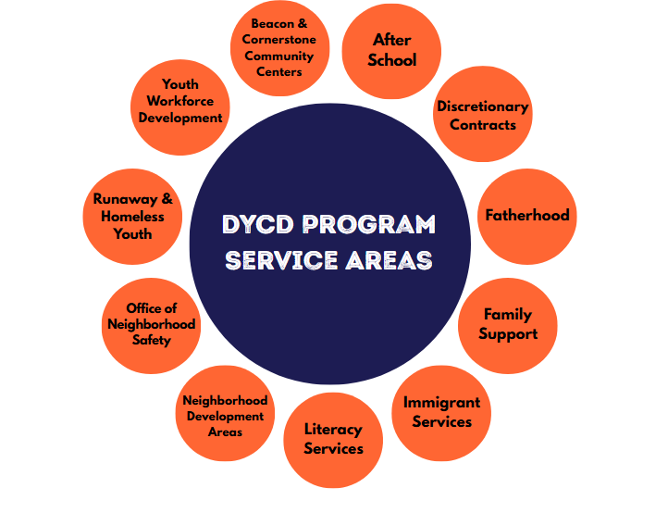
The Department of Youth and Community Development (DYCD) is one of New York City’s most essential engines for opportunity, equity, and community vibrancy. By investing in after-school and summer programs, leadership development, career pathways, literacy support, and services for runaway and homeless youth (RHY), DYCD ensures that young New Yorkers have safe spaces, trusted mentors, and real chances to succeed. Beyond youth programs, the agency anchors neighborhoods through adult literacy classes, immigrant services, workforce training, and community hubs like Beacon and Cornerstone centers. DYCD also administers the majority of the City Council’s discretionary contracts–approximately $214 million in Fiscal Year 2026 (FY26)–making it a critical partner in advancing community-based services across all five boroughs.
The work of the agency is guided by eight principles to fulfill its mission: Opportunities for All, Stewardship, Holistic Approaches, Being a Learning Organization, Integrity, Strategic Relationships, Inclusiveness, and Community Voice. While DYCD is committed to following these principles and delivering core services, ongoing challenges–including a consistent lack of funding and resources, minimal program expansion, inadequate communication with providers, and a lack of strategic planning–hinder their progress toward reaching its guiding principles and core goals. The agency remains chronically underfunded, and the resources provided to the agency often fail to align with the critical and time-sensitive needs of providers and programs. This resource gap is further worsened by systemic communication breakdowns between the agency, its contracted providers, and the very communities it is meant to serve, undermining progress towards its mission and goals. Moreover, the agency’s lack of a comprehensive, up-to-date, strategic plan suggests that internal staff and external contractors are not aligned. This results in an inability to accurately evaluate program outcomes and effectively utilize feedback from providers and the community.
Access to shelter, after-school programs, disability accommodations, language services, and job opportunities for young people is essential to making New York City not only a symbol of hope, but also a model of diversity, opportunity, and shared success. DYCD has shown a real commitment to its guiding principles and, despite funding and other obstacles, has built strong partnerships with program providers and continues to passionately advocate for its mission. There is great potential for strengthening the agency’s core work and services with adequate funding, resources, and greater investment in cultivating internal leadership. Now is the time for the City to deepen its commitment to the important work of DYCD and to the programs and services that support the children and youth who call New York City home, and to ensure that they have the foundations they need to thrive and grow.
Note from the Evaluation Team
The evaluation team would like to make it clear to readers at the outset, that while the Department of Youth and Community Development has been graded across six pillars and associated indicators within such pillars, those grades may not reflect actual conditions on the ground. While this report card initiative was launched by Speaker Adrienne Adams on March 13, 2024, the ability for the City Council to engage with senior DYCD leadership and receive information from DYCD was critically handicapped by the Mayoral Administration at every step in the process.
Key information that could better inform the public about the performance of the agency viewed through the report’s pillars has not been procured for the Council.
The evaluation team has graded the Department of Youth and Community Development with the information received. Due to the Administration’s intransigence on cooperation with the Council, this report and the performance evaluation of DYCD is incomplete. Please see Timeline for a more detailed timeline on engagement between DYCD and the Council.
Key Findings
Recommendations prioritize communication, meaningful engagement, comprehensive case management, and long-term strategy planning.
- DYCD would greatly benefit from developing and publicly releasing an agency-specific strategic plan to ensure that the public and providers understand DYCD’s vision.
- DYCD needs consistent and clear funding timelines to ensure that providers are being compensated properly, and communities receive resources when they are most needed.
- DYCD’s collaboration with other governmental bodies and City agencies is greatly hindered by mayoral oversight; the agency should be granted more autonomy over its primary functions.
- More consistent communication and transparency with contracted providers is needed from the agency to ensure that DYCD-funded programs are serving communities as intended.
- DYCD should have a clear plan and vision for how they use provider feedback to improve their internal and external processes.
- DYCD maintains strong recruitment and development efforts but needs a larger share of the budget to increase CBOs’ pay and strengthen agency support.
- DYCD would benefit from improving communication around how the agency’s digital efforts support DYCD’s wider strategic vision and the City’s consolidation efforts through OTI.
- The agency also needs to focus more on simplifying the end user’s digital experience, from providers to communities in need.
- DYCD should reevaluate its program evaluation and performance measurement metrics to have a larger focus on programmatic and participant outcomes, while also setting more ambitious targets that will strengthen service delivery.
Leadership, Strategy and Direction

Service Delivery For New Yorkers

Relationships and Collaboration
Workforce Development

Financial and Resources Development
Digital
Government
Measurement, Analysis and Knowledge Management
Leadership, Strategy, and Direction
| Indicators covered by the targeted review | Rating |
|---|---|
| Leadership and Governance | C |
| Strategy Development | D |
| Strategy Implementation | C |
- Leadership and Governance
Agency Strategy
Leadership and governance are important in local government for guiding strategy, policy and programmatic direction, and for ensuring that available resources are being used effectively. Leadership also helps in determining how to set out the nature and scope of an agency’s strategic objectives in enough detail to encourage implementation and to ensure that its chosen strategic direction is being communicated effectively to the public.
DYCD’s mission is to invest “…in a network of community-based organizations and programs to alleviate the effects of poverty and to provide opportunities for New Yorkers and communities to flourish.” Its vision is described as improving “the quality of life of New Yorkers by collaborating with local organizations and investing in the talents and assets of our communities to help them develop, grow, and thrive.”
The agency is primarily responsible for the City’s youth-orientated strategic planning, service coordination, policy development, and related public and community awareness efforts for its relevant services and resources. In pursuing its mission and vision, DYCD principally functions as a partnering agency across multiple service areas. Through formal contracting, strategic partnerships, and collaboration, the agency works with CBOs and other local institutions, schools, and community members, to build capacity within available resources.
As a government agency, DYCD has a responsibility to the public (and the City Council) to identify and explain how it intends to meet its statutory mandates and spend the public money it has been given the authority to spend. DYCD’s leadership decisions, its strategic planning and direction, are currently monitored through various citywide accountability mechanisms. These include:
- DYCD’s communication of its vision and mission through its official website and online media (outlined further under the Digital Government pillar), and indirectly through non-digital means such as flyers and worth-of-mouth;
- Any strategic priorities, policy statements, or other strategic planning or organizational documents that DYCD chooses to complete and promote, consistent with its Charter-mandated powers, or any other non-legislated reports or materials it may publish;
- Information on DYCD incorporated annually in the Charter-mandated Mayor’s Management Report (MMR);
- Performance evaluations conducted annually to assess the performance on City contracts– available via the “Procurement and Sourcing Solutions Portal (PASSPort)” operated by MOCS;
- Any information that DYCD provides during Council oversight and budget hearings held throughout the year (including in relation to the MMR);
- Statutory reporting obligations such as compliance under ‘open data’ laws, language access implementation, strategic planning under interagency coordination duties, accessibility plans, and State-mandated reporting, among others; and
- Dissemination of information and data as part of its mandated reporting obligations through an annual policy statement, and the strategic policy statement, respectively; or, through agency reporting to the Deputy Mayor of Strategic Initiatives.
For this review, DYCD provided some evidence of the internal processes it uses to monitor the agency’s strategic direction, and for communicating its direction through existing City accountability mechanisms. However, the agency provided almost no information on whether it has, or will have, a public-facing strategic planning framework (with actionable milestones), to guide its mission and vision, or to identify how the agency coordinates its priorities with the Administration and other agencies. There is room for DYCD to improve how it articulates its strategic vision to the public and to relevant stakeholders. Given the importance of stakeholders to DYCD’s mission, it could also benefit from periodically identifying, through a strategic plan or other tools, how it intends to manage and coordinate its efforts with the City, agencies, and relevant stakeholders, to achieve its desired aims.
- Strategy Development
Strategic development is important for helping agencies identify their priorities and connect them to measurable outcomes. Aside from DYCD’s general powers and duties noted above, it is not required to produce an overarching strategic plan, which gives the agency some discretion in deciding how it establishes and advertises its intended goals within the City’s existing accountability and reporting framework.
Since June 2022, Keith Howard has served as DYCD’s Commissioner. During this time, DYCD (one of the City’s largest agencies), has seen continued increases in its allocated funds, staffing levels, and the value of its contracts and interagency agreements. In its response to whether DYCD has an established long-term strategy, the agency cited its vision and mission, and noted that its strategic priorities are ultimately based on the Mayor’s and Commissioner’s priorities. DYCD identified its priorities as including:
- Integrating ONS;
- Timely contract payments to providers;
- Increasing its funding (from the State, federal sources, and philanthropy);
- Increasing its strategic partnerships;
- Increasing the marketing and promotion of the agency’s programs; and
- Promoting diversity, equity, and inclusion.
In addition to these priorities, DYCD maintains strategic planning processes relating to performance improvements and policy development measures. These include agency evaluations of its data, and program evaluations conducted under DYCD’s Planning, Program Integration, and Evaluation (PPIE) division, and programmatic monitoring through its Evaluation and Monitoring System (EMS), a web-based platform accessible via the DYCD Connect system—an online portal for the public to access various information.
Aside from technical review processes, DYCD also produced annual reports (since at least 2014) although only the 2022 and 2023 annual reports are available through DYCD’s official reports webpage. As of the writing of this report there is no 2024 annual report. While these reports provide a high-level summary of the MMR, various agency highlights, and current initiatives, they do not articulate clear goal-setting priorities, or detail resource allocations for achieving them.
When reviewing the agency for this report, the Council heard from DYCD, advocates, and stakeholders, through a series of roundtables, meetings, and survey responses. From DYCD directly, senior leaders appeared knowledgeable and dedicated to identifying and setting new internal strategic priorities as an agency. While useful, transparency and accountability also demand that agencies work to ensure that their chosen strategies are aligning with public expectations. In this regard, stakeholders were consistent in wanting earlier and more consistent input from DYCD through better public sharing in the concept phase and more transparency around the agency’s short-term and long-term priorities—an aspect particularly critical given DYCD’s primary role as a contracting agency for CBOs and other external parties.
Unfortunately, and as addressed further under the Digital Government pillar, while DYCD clearly works hard to provide sophisticated and continuously improving online portals with relevant agency information, DYCD does not, at present, appear to have detailed publicly available information on its overarching long-term aims, or projected outcomes, as an agency. In answer to its approach on its long-term (or medium-term) strategic planning, DYCD–and the Administration–acknowledged its importance and pointed to internal ongoing processes to improve operations through an internal strategic plan (which was reported as being developed through the production period of this review). A toolkit for CBOs from the Community Resource Exchange, a key partner to DYCD as a technical assistance provider, also provides guidance directly on the importance of goal setting for strategic planning, indicating that DYCD views this strategic planning as important for the partners it uses to capacity build.
While regrettably the Administration did not make these internal strategies available to the review team, these efforts are nevertheless positive for DYCD, and something which should be continued. However, publicly available strategic planning remains an important component for improving agencies’ engagement, as public entities, with the constituents they serve, and the partners they rely on. For DYCD and the Administration, it is not sufficient to rely solely on other accountability mechanisms when the external partners DYCD relies on are asking for clearer strategic direction and stronger integration that incorporates their insights and expertise. A publicly available plan encourages engagement and scrutiny, and allows those supporters of an agency to closely monitor its direction and intended outcomes.
The Adams Administration’s reluctance for DYCD to produce such a plan is a missed opportunity for DYCD to demonstrate its internal efforts to strengthen its planning and outcomes. It also reflects poorly on an Administration presenting itself as transparent and efficient, while claiming to align DYCD’s priorities through the Office of the Deputy Mayor for Strategic Initiatives—which has minimal public or online presence.
There is an opportunity for DYCD to expand on its mission and vision through better articulating its strategic priorities through regular reporting. Setting these out with a measurable timeframe and the details necessary to achieve them, would assist CBOs and other stakeholders in understanding the agency’s aims, priorities, and constraints. This would also give DYCD an opportunity to routinely review its own overarching aims over each improving accountability for each review period. It could also help to provide better context for information in the MMR and other short-term reporting obligations, beyond that which is currently contained in DYCD’s annual reports. It could also assist both the Mayor in meeting their responsibilities under the Administration’s Charter-mandated strategic policy statement required every four years (an obligation the Administration is not currently meeting), and the Deputy Mayor for Strategic Initiatives in their strategic policy setting, by better understanding the long-term needs of the agency.
In Focus: DYCD’s Calendar Year 2025 Strategic Priorities Planning Process
While DYCD does not have a long-term strategic plan for the agency, senior officials from DYCD and the Administration met with the evaluation team to discuss the agency’s formulation and implementation of strategic priorities for calendar year 2025. The evaluation team heard how these strategic priorities focused on programmatic and operational priorities laid out by the Commissioner and further articulated goals and milestones to advance DYCD’s mission of alleviating the effects of poverty. While DYCD was unable to share the full strategic priorities document, senior agency officials briefed Council staff with a top-level overview of this process.
The evaluation team also heard how the process of compiling the strategic priorities for DYCD began in 2024 and was a revival of a process that the agency has undertaken many times in past years, although it had not been done since the second term of the de Blasio Administration. The stated intent of this process was to create an internal tracking and accountability document. Given the limited resources allocated to this project, DYCD noted that they were unable to expand the scope beyond one year, but will reevaluate this process for 2026.
When asked if DYCD engaged with public stakeholders throughout this process, DYCD mentioned that they would have liked to, but were unable, again citing limited resources. In terms of consultation with other City agencies or offices, DYCD referenced its relationship with DOE, noting that the agencies are already in alignment, and consultation with DOE was not deemed necessary.
While DYCD initially noted that this was solely an internal document with no plans for public release, when asked by Council staff if parts could be posted publicly, DYCD seemed amenable, stating that while “resources are tight, [this could be] something to consider with the resources available.” However, a senior Administration official questioned the need to publicize the agency’s strategic priorities, responding further that they did not see an agency or public benefit to the agency producing an agency-specific strategic plan. This response seemingly contradicts the Mayor’s stated commitment to “accountability, transparency, and effective governance.” The Administration official emphasized the sufficiency of “countless formal and informal touch points” for public engagement, and that this is an internal plan to achieve results and that the MMR publicly reports those results. As Executive Order 6 of 2022 states that “a free society is best maintained when the public is aware of and has access to government actions and documents, and the more open a government is with its people, the greater the understanding and participation of the public in government,” the Council strongly disagrees with the Administration’s views expressed to the evaluation team. Ultimately, the Council, with its Charter mandated power of investigation and oversight, benefits from performance reporting to help it better understand the activities of City agencies, including their service goals and management efficiency. Clearer reporting also helps to maintain public trust and confidence in City agencies by enabling better scrutiny by the Council, as the public’s representatives.
As DYCD undergoes a significant expansion for afterschool programs coupled with the first RFP for these programs in over a decade, the Council’s concerns regarding the strategic planning process and transparency are exacerbated. Bringing “together a cross-sector of leaders from community-based afterschool providers, advocacy groups, philanthropy, and the business sector” in an advisory capacity can strengthen the future of the programs. But delegating the responsibility of creating a strategy for this expansion to a new entity with an as-yet minimal public presence, rather than integrating it into a larger strategic plan for the agency charged with administering the contracts and providing support to CBOs and providers who are on the frontline, is yet another curious decision.
The Commission on Universal After-School, created pursuant to Executive Order 54 of 2025 is comprised of industry leaders who each bring to the table decades of experience. But with the day-to-day staffing of the Commission resting within the Administration, no formalized public feedback processes and public reporting of the deliberations and conclusions of the Commission built into the Executive Order, and the Administration’s expressed posture around transparency, the Council questions whether this is the most efficient and effective route for the formulation of this strategy. Further, given advocates’ concerns around communication and responsiveness raised throughout this report, there is a risk of this approach creating yet another separate channel of communication that CBOs and providers will have to navigate. The success of afterschool programs is paramount to the success of youth in New York City, and in pursuit of this goal, the Council supports a paradigm shift to one that centers and emphasizes transparency and collaboration, both public and institutional, in the strategic planning process to best support DYCD and its partners.
- Strategy Implementation
Effective strategic implementation should closely link to an agency’s strategic priorities, and appropriately integrate with all service delivery processes through a culture of continuous improvement. As noted, DYCD has broad authority to determine how it implements its overarching strategic direction, unlike with other duties including to produce a five-year accessibility plan, and language access implementation plan, where legislation prescribes what specific elements must be included.
Beyond the City’s broad accountability mechanisms, larger agencies develop a range of strategies to meet both their internal sub-divisions’ and the community’s needs. For this performance evaluation, aside from noting its mission, DYCD identified PPIE as integral to sub-agency contracting, serving as the bureau that codifies the required practices in its monitoring indicators and translates them into implementation. PPIE comprises several teams that work to integrate the network of programs DYCD oversees. These teams—not identified on DYCD’s publicly available organizational Chart—carry out various functions to advance DYCD’s capacity-building goals, with the agency implementing its plans through partnerships with its CBOs and internal agency divisions.
Being a large contracting agency that operates many different initiatives brings inherent challenges in communicating the agency’s efforts and achievements. As noted, while stakeholders generally agreed that DYCD meaningfully involves them in policy review process—from creation and implementation to monitoring and evaluation—they expressed a desire for greater transparency in how policy and priorities are set, how their feedback is incorporated, and ultimately, in understanding the rationale behind funding allocations and program evaluations.
As with its approach to strategic development, DYCD could address this by more clearly articulating a strategic plan that connects its core responsibilities to measurable priorities and sets timeliness for achieving them. This could then be used to feed back into its evaluations of progress towards program goals, providing more meaningful assessments of whether CBO partners are aligned with the agency’s aims.
DYCD could also benefit from using its strategic plan to identify all its responsibilities to the Mayor, other agencies, and stakeholders in relation to its intended operations (in accordance with its mandates), and linking those responsibilities to its priorities for each reporting period. To achieve this, the agency should expressly identify in its strategic plan every City agency, stakeholder, or other public or private partner the agency intends to co-ordinate with to achieve or contribute to its strategic priorities. If a sub-agency is operating under DYCD pursuant to legislation, the agency should define that sub-agency’s functions and what it will aim to achieve under its statutory mandates. The five-year accessibility plan and language access implementation plan are two examples of plans that already require more robust articulation of strategic priorities. Adopting a similar framework for an agency-wide strategic plan could help DYCD to better define its role, and that of its partners, in carrying out its strategic priorities.
Service Delivery For New Yorkers
| Indicators covered by the targeted review | Rating |
|---|---|
| Equity | C |
| Access | D |
| Meeting Demand | D |
- Equity
Service and Resource Inclusivity
Inclusivity is a key aspect of people-centric services, and an organization must ensure that all services and programming are designed with a people-centered approach and accessible to all segments of the target population.
DYCD monitors all programs through site visits and provider feedback to ensure a safe and welcoming environment. It also implements an equitable investment strategy for site programs in areas of highest need, and staff receive training on accessible and inclusive engagement, including for people with diverse abilities and those with limited English proficiency. DYCD states that its expanding training for service providers and will include expanded topics, such as universal program design.
Inclusivity is also one of DYCD’s eight guiding principles, with the agency committing to “encouraging and inspiring the organizations [they] support to provide quality services to all communities, in safe, accepting environments with staff who are supportive, welcoming, and trustworthy.” In reporting on the progress made towards the agency’s equity goals, DYCD highlights that “Black, Indigenous, and people of color (BIPOC) communities represent over 85 percent of program participants” and an expansion of “programs for young people up to age 24, NYCHA residents, and runaway and homeless youth,” among other achievements.
According to DYCD’s five-year accessibility plan, the agency is committed to ensuring its programs are accessible for those in the community that are differently abled. This is supported by its statement which reads
“At the New York City Department of Youth and Community Development (DYCD), we are committed to ensuring an inclusive and accessible environment for all our employees and our program and service participants. That means we’re committed to reducing barriers to accessibility for persons with disabilities, to have equal access to our resources and opportunities including in the workplace, and in the communities we serve. We understand that accessibility is essential to prevent discrimination and create a more inclusive and diverse workplace, which has been known to have positive effects on employee morale and productivity. Through this five-year accessibility plan, we are committing to taking proactive steps toward reducing or removing existing barriers”
Some advocates have raised concern that DYCD underserves youth with disabilities and lacks proper support and access that enables them to fully participate in DYCD programs.
At a 2023 joint NYC Council Oversight Hearing on After School Program Support for Students with Disabilities held by the Committee on Youth Services and the Committee on Mental Health, Disabilities, and Addiction, testimony submitted by INCLUDEnyc advocates for the importance of proper funding and care to support students with disabilities. According to hearing testimony, “Most publicly funded after school programs not operated by the Department of Education have limited experience supporting students with disabilities. Community-based providers often do not have formal training or experience working with students who receive special education services and do not have access to appropriate professional development opportunities. As a result, many community providers far too often cannot accommodate students with disabilities because they do not think they can appropriately support them with their existing staff and they do not receive funding to hire additional qualified staff, including paraprofessionals and nurses.” After-school providers also cited obstacles to supporting youth with disabilities due to a lack of coordination and sharing of information with school providers on student Individualized Education Programs and relevant accommodations.
Paraprofessionals are employed by DOE and CBOs to work with students in after school programs, including students who are differently abled or require other forms of care. Paraprofessionals provide crucial support to afterschool programs and can offer more individualized and direct support to students, allowing students with disabilities to receive personalized attention from providers. Testimony submitted by United Neighborhood Houses at the DYCD 2026 Executive Budget Hearing held on May 19, 2025, states that funding for paraprofessionals is needed. The CBO encourages DYCD to work with providers to develop a plan for serving youth with disabilities in COMPASS and “School’s Out New York City” (SONYC) programs.
A 2024 Council roundtable and survey with DYCD providers and advocates revealed that DYCD programs and services underserve some vulnerable subpopulations. According to After-School, Adult Literacy, and RHY advocates, migrant communities face barriers to accessing many DYCD programs due to shortages of multilingual staff and public transportation options from program sites to migrant shelters. Additionally, advocates stated that Adult Literacy program funding was cut by 35 percent last year, and the contract amendments were unfavorable for providers.
Many CBOs face challenges in extending services to all eligible or interested community members due to insufficient funding; specifically, some community development organizations located outside specific Neighborhood Tabulation Areas (NTAs) cite receiving significantly less support than other CBOs in neighborhoods despite similar community needs. RHY providers also reported dramatic underfunding.
While DYCD serves many marginalized communities, extensive feedback from providers and advocates on barriers to access faced by distinct subpopulations suggests that DYCD programs are not yet accessible to all segments of the population.
- Access
Availability of Resources and Assistance
The agency states that providers and participants use the discover DYCD portal to find nearby programs. This process is the agency’s primary means of informing the public of the resources available to them in their area.
It is important to note that DYCD’s web platform, which enables the public to search for and apply for DYCD programs, states that “DYCD-Funded services are offered free of charge except for Discretionary funded services where providers had informed Council as part of their application that they would be charging fees and obtained prior written approval from DYCD.” Accordingly, most DYCD-funded programs are offered at no charge.
DYCD partners with DOE to provide free summer enrichment programs to K-8 public school students, administered by COMPASS and Beacon providers. In the summer of 2024, more than 115,662 public school students participated in and benefited from these programs. COMPASS consists of 890 programs serving youth enrolled in K-12. K-5 students are offered literacy instruction, homework help, essential arts, physical activity, national programming, and more, 5 days a week, including school holidays and summer. Beacon providers serve 92 school-based community centers that work with children aged six and older, as well as adults. These programs operate during non-school hours and typically include activities such as academic enhancement, life skills, career awareness, civic engagement, recreation, fitness, and cultural enrichment.
It is crucial to consider that timing significantly influences access and the availability of resources. For instance, the FY26 Adopted Budget added 100 beds for DYCD’s RHY youth program for individuals aged 21 to 24. This would increase the total number of beds available for this age group to 160. During a Council oversight hearing on RHY held on June 21, 2022, advocates expressed an urgent need for more beds, stating that the existing 60 beds for older youth were inadequate. Although the increase in beds is a positive development for DYCD and the community, the lack of progress over the past three years has left this age group without sufficient access to resources in the meantime.
Supplying resources in a timely manner is important when meeting the needs of communities because it equips providers with the tools necessary for service delivery when the moments are most impactful or prevalent. Significant delays in funding, program implementation, and resource expansion further aggregates existing struggles and gaps in these services. While DYCD eventually meets many demands, there is a disparity of support for vulnerable populations during the waiting period that can lead to a lack of efficient care for these communities when they need it most.
While the Council recognizes resource constraints and agency obligations that contribute to the reduced availability of resources in a timely manner, it is incumbent upon the agency to prioritize the pressing needs of those they serve, especially the most at-risk. As discussed earlier in this report, a public facing strategic policy statement and accompanying implementation plan would highlight the agency’s aims, priorities, and constraints and allow the Council, CBOs, and other partners to better react to deficiencies where identified.
Selected DYCD Programs
In Focus: Runaway and Homeless Youth
“The New York City Department of Youth and Community Development funds services for Runaway & Homeless Youth that include Drop-in Centers, Crisis Services Programs, Transitional Independent Living programs, and Street Outreach and Referral Services.” All programs offered by RHY are free and cover a proportionate range of needs to address the key issues facing their target beneficiaries.
These programs include:
- Transitional Independent Living
- Crisis Services Programs
- Borough-Based Drop-In Centers
- Street Outreach
DYCD identifies its target beneficiaries of its programs as individuals aged 16-24. The first two programs (Transitional Independent Living and Crisis Services Program), DYCD divides this group into two age groups, one for individuals aged 16-20 and the second for those aged 21-24. Program locations and contact information for Crisis Services, Borough-Based Drop-In Centers, and Street Outreach are available on the DYCD website.
These programs play a vital role in supporting at-risk youth with resources that touch topics of education, job security, housing security, mental health management, life skills, and housing reunification. Even so, RHY, as a whole and divided amongst its programs, has inefficiencies that create accessibility issues for the communities they aim to serve. Despite the additional 100 beds for the program ultimately secured in the FY26 Adopt Budget, testimony by advocates at the FY26 Executive Budget Hearing, held on May 19, 2025, highlighted that existing drop-in shelters are still consistently underfunded and understaffed. Additionally, because the bulk of DYCD’s mental health related programs are housed within RHY, there is additional concern of underfunding for drop-in centers that provide free counseling and emotional support.
In Focus: Cornerstone
“Cornerstones provide engaging, high-quality, year-round programs for adults and young people. Programs are located at 100 New York City Housing Authority (NYCHA) Community Centers throughout the five boroughs.” The program began in 2010 at 25 NYCHA Community Centers and has since expanded to 99 NYCHA Community Center locations throughout the five NYC boroughs. All programs are free and cover a wide range of topics.
Youth program areas typically include:
- Academic Supports
- Life Skills / Interpersonal Skill Development
- Healthy Living
- High School and College Prep
- Project-Based Activities
- Science, Technology, Engineering, and Mathematics (STEM)
- Creative and Performance Arts
- Entrepreneurship
- Youth Councils
These programs are for ages 5-21 and have both summer enrollment (early spring) and school year enrollment (Elementary Aug-Sept, all others, year-round)
Adult program areas typically include:
- General Educational Development
- English for Speakers of Other Languages
- Parenting Skills
- Workforce Development and Referrals
- Family Relations
- Tenant Education and Advocacy Cultural Activities
- Computer Access and training
- Intergenerational programming
- Cultural Activities
These programs are for ages 21+ and have both Summer Program Enrollment (April) and School Year Enrollment (Aug-Sept).
Program location and contact information can be found on https://discoverdycd.dycdconnect.nyc/home.
These programs play a vital role in supporting the City’s communities with resources and opportunities, but providers continue to face challenges. During the DYCD 2026 Executive Budget Hearing held on May 19, 2025, Commissioner Howard discussed ongoing talks with other City agencies, such as the Office of Management and Budget (OMB), about expanding these programs. As of 2025, Cornerstone contracts have not been updated in ten years. At the same hearing, Deputy Commissioner of Youth Services, Susan Haskell, testified that there are currently 100 Cornerstone programs.
In Focus: Comprehensive After School System of New York City (COMPASS) and School’s Out New York City (SONYC)
COMPASS is a program for young people enrolled in grades K-12. It gets young people to participate in Science, Technology, Engineering, and Mathematics (STEM) learning, arts and sports programming, and skill-based work to “support academic achievement, raise confidence and cultivate leadership skills through service learning and other civic engagement opportunities.”
For students in grades 6-8, DYCD’s middle school program SONYC provides youth with after school programming in a variety of activity areas. SONYC provides “rigorous instruction in sports and arts; and requires youth leadership through service.”
In April 2025, New York City made a historic $331 million investment to advance Mayor Adams’ vision of “After School for All,” aiming to provide access to afterschool programming for all public school students from kindergarten through eighth grade. This commitment, which will total $755 million in annual funding, supports the phased addition of 20,000 new after-school seats over three school years. Beginning in Fiscal Year 2026 (FY26), 5,000 new seats will be added to existing COMPASS programs, followed by an additional 10,000 seats in Fiscal Year 2027 (FY27) and the remaining 5,000 in FY28. These programs provide critical enrichment activities after school, during school holidays, and in the summer—supporting the academic, social, and emotional development of K–8 students while providing essential childcare for working families.
In anticipation of this expansion, DYCD released a concept paper outlining the framework for upcoming RFPs for COMPASS Elementary and SONYC programs, released on October 1, 2025. Advocates have voiced concerns that the proposed year-round price per participant rates of $6,800 do not account for inflation and Cost-of-Living Adjustments (COLAs) over the grant period. Furthermore, the rate is insufficient for full-year elementary-school aged programming when including all described program elements and with staff child ratios. The Committee on Children and Youth held an oversight hearing on September 18, 2025, to evaluate the goals, structure, provider feedback on DYCD’s proposed program design, and implementation plan.
In Focus: Summer Youth Employment Program (SYEP)
SYEP, established in 1963, is one of DYCD’s many youth programs and one of the largest youth employment programs in the country. SYEP was designed to connect New York City youth, aged 14 to 24, to career opportunities and paid summer jobs to better prepare them for future careers.
SYEP offers various programming depending on your age and background. Youth aged 14 to 15 receive a summer stipend to participate in project-based learning activities that benefit the community and provide them a chance to explore career opportunities. Youth aged 16 to 24 are set up with a paid summer job or internship in industries such as fashion, technology, arts, healthcare, transportation, real estate, and hospitality to improve their work skills and engage them in exploring various career paths. SYEP participants who face certain employment barriers are eligible for the Emerging Leaders program, which provides more specialized experiences. Participants must face at least one of the below barriers to qualify for eligibility:
- Homeless or runaway youth
- Justice-involved youth
- Youth in or aging out of foster care
- Receiving preventative services through the Administration for Children’s Services (ACS)
SYEP prioritizes youth who come from underserved communities and face various barriers to job opportunities. Due to SYEP’s limited number of spots, DYCD actively de-enrolls SYEP participants who fail to complete key work readiness tasks before July 1st so that they are able to open those slots to other youth they feel might better benefit from the opportunity.
The FY25 Preliminary Budget included $225 million for SYEP, 6 percent less than the FY24 Adopted budget. At adoption, the FY25 included $234.8 million for SYEP. The FY26 Adopted Budget included $243.5 million for SYEP, a 3.71 percent increase over the FY25 Adopted Budget.
In FY25, SYEP received 183,363 applications but was only able to fulfill about 53 percent due to limited availability of program spots. SYEP has grown by almost 30 percent over the last three years, from 74,884 participants in Fiscal Year 2022 (FY22) to 97,004 participants as of the FY25 Preliminary Mayor’s Management Report (PMMR). Despite DYCD’s statement in their SYEP program description that SYEP opportunities are paid, only about half of all participants in FY25 received stipends or wages, totaling close to $140 million.
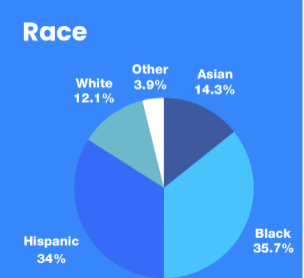
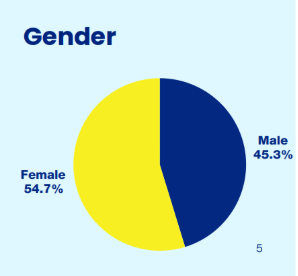
The most recent Annual Summary report for SYEP highlighted that the majority of SYEP participants, 62 percent, came from Brooklyn and the Bronx and participants were either largely Black or Hispanic (36 percent and 34 percent respectively), and majority female, 55 percent. See below for the full breakdowns:

In Focus: The Fatherhood Initiative
According to DYCD’s 2016 Fatherhood Initiative Concept Paper, in New York City, about 22 percent of children are being raised in homes without fathers. When fathers are actively involved in the lives of their children, their children perform better in school, are more likely to be emotionally secure, and more likely to exhibit self-control and prosocial behavior. The Fatherhood Initiative, which was contracted separately from DYCD’s other Family Support Programs, is designed to promote responsible fatherhood. The program was created to help low-income, non-custodial fathers improve their relationship with their children through increased engagement with them as well as increased financial support. The initiative offers resources to three groups of fathers: fathers ages 16 to 24 (“young fathers”); fathers 25 and older (“older fathers”); and fathers with prior involvement in the criminal justice system (“justice-involved fathers”). Contractors serve a minimum of 180 and a maximum of 210 fathers annually in three cycles of 60-70 participants each. Once participating fathers have received three months of program services, they then receive three months of follow-up services.
DYCD Fatherhood programs are designed to address five core areas: 1) parenting skills; 2) effective co-parenting with the child’s guardian; 3) employment and education; 4) child support; and 5) visitation. Staff use a strengths-based approach and work with the participant towards goals identified by the participant through workshops, support groups, and other activities. The programs incorporate principles of positive youth development, family engagement, social and emotional learning, and youth leadership, which the participants can in turn apply in their relationships with their children.
Fatherhood program participants are recruited in a multitude of ways. In some cases, participants are required to complete the program as part of a court order. In others, caseworkers from New York City agencies or outside organizations refer those who they believe could benefit from the program. Referral sources may come from ACS, legal services, foster care, and nonprofit organizations. According to a 2016 study of the program by Policy Studies Associates, Inc., a total of 2,952 men enrolled in the Fatherhood Initiative from July 2012 to June 2015. While participants reported benefitting greatly from the services offered through the program, several recommendations emerged from the study:
- Offer more differentiated services;
- Expand services to address basic needs of participants;
- Systematically offer legal services and support for navigating the legal system;
- Provide more options for programs for mothers or joint workshops with co-parents;
- Expand education and employment supports;
- Focus on retention; and
- Create more structured supports for alumni.
Mitigating and Reducing Program Barriers
DYCD highlights its feedback collection process and community engagement as its primary means of forging a path forward to make programs more accessible and eliminate existing barriers.
The agency states that they conduct a series of surveys for participating to determine why a specific accessible need was not met.
The choices range from:
- The program was too far away
- I did not know where to go
- Costs too much
- Programs not offered during a time when they could go
- Turned away/waitlisted by the program
- Not provided in their language
- Poor quality of service
- I did not know help was available
- Other
Moreover, DYCD responds with similar reasoning and processes for various agency and programmatic solutions and improvements. In correspondence with DYCD, a consistent theme emerged regarding the use of community and provider feedback to guide their programs and the actions they take as an agency, with the caveat that these factors held strong influence but were not final deciders; other factors, such as funding and jurisdiction limitations, took precedence. However, further analysis shows minimal and underdeveloped improvement across programs over the years. Discussed in more depth in the metric analysis pillar of this report, previous MMR statistics paired with advocate feedback suggest that DYCD’s plan to mitigate and reduce programmatic barriers moving forward is underdeveloped.
Several indicators provided in the MMR support advocates’ claims by demonstrating a lack of growth and goal adjustments. Additionally, the agency records most of its CNAs within RFPs, which are minimally updated, further supporting advocates’ claims.
- Meeting Demand
Referral Processes
For an organization to meet the highest standard of service access, it must have processes in place to refer clients to alternative services if it cannot provide them with the services directly due to ineligibility or lack of capacity.
DYCD conducts referrals of services and programs through public outreach and intake processes. DYCD states that they refer individuals to certain programs based on their respective needs and prioritize ensuring that community members have access to information and their programs.
The agency also states that they rely heavily on word of mouth and CBOs referring clients to services and programs. Advocates claim that they often refer individuals to other CBOs and programs depending on the specific services they need.
Continuity of Services
Continuity of services can be understood as an individual receiving services at the same location from the same provider or the seamless delivery of services through the referral, coordination, and integration of information among different providers. While services provided at the same place by the same provider is optimal, it is recognized that a single provider can rarely meet all of an individual’s needs.
Continuity of services depends on several variables including location, income, eligibility, and funding. Provided these criteria are met, individuals within specific locations should be able to access their local programs regularly. DYCD states that they prioritize ensuring programs meet the community where they are and are consistently accessible for those utilizing their resources.
On the other hand, certain advocates claim that there is a lack of continuity in DYCD’s specific processes for programs. For instance, at a joint oversight hearing on Summer Rising by the Council’s Committee on Children and Youth and Committee on Education held on October 30, 2024, a local advocate testified that “there is no continuity under the current enrollment process. Parents and students are upset that when they are offered summer rising slots, it’s often in an unfamiliar school or an unfamiliar CBO.” In fact, one CBO that offers summer programming through Summer Rising, provided testimony that the enrollment process “would be far more effective if schools and CBOs could collaborate and support families in enrolling in a summer program that meets their children’s needs.” The CBO continued that in its “observation over the past four summers […] families dropped out of Summer Rising at rates far higher to rates [it] saw prior to Summer Rising, when the city funded CBOs to run full-day camps and allowed them to control the enrollment process.”
Service delivery varies across programs and individual experiences; as such, it can be challenging to ensure continuity of care with multiple elements involved; however, the agency still has a responsibility to provide individuals with consistent and accessible programs and resources to the best of their ability.
Ensuring Communication and Support
An essential aspect of service accessibility and client prioritization is guaranteeing that agency support is available to all clients through various channels.
In a Council roundtable with advocates, many expressed that the feedback collected by DYCD is not used but is rather perfunctory. Many claim that DYCD is unreachable, makes minimal effort to return phone calls and emails, provides no information on how their feedback is being used, and has not seen their feedback implemented for growth. Furthermore, their claims related to contract concerns and non-payment issues are often met with no response. Advocates state that the agency has also eliminated their in-person feedback sessions and heavily restricted their Zoom sessions, which are also described as unhelpful. Out of 37 of advocates surveyed and met with, 27 percent agreed that DYCD’s feedback process and communication with CBOs is lacking. Providers claim that their feedback and communication process is not used to benefit the agency or their contracting process. This directly contradicts DYCD’s claim that provider input and communication are one of their primary sources of agency and program improvement.
When this topic was addressed during a meeting with DYCD, the Council inquired about managerial oversight on program managers, to which the agency stated that there is not a significant amount. According to the agency, program and case workers are not monitored when they reach out to a provider or fail to do so. There is no tracking process for timely responses to inquiries from providers, and there is limited accountability to ensure that program managers communicate with providers consistently and thoroughly. As a result, providers report that their calls and emails are rarely answered, and their program managers are difficult to contact.
Relationships and Collaboration
The Relationships and Collaboration pillar assesses how inclusive the agency’s policy design and improvement processes are. This review also assesses the agency’s effectiveness in collaborating with external partners, as agencies frequently work with outside stakeholders, including CBOs and other governmental agencies, to achieve shared objectives. The evaluation is conducted with an understanding that positive working relationships and collaboration are contingent on outside partners’ willingness to work with the agencies.
| Indicators covered by the targeted review | Rating |
|---|---|
| Stakeholder Engagement | D |
| Institutional Engagement | C |
- Stakeholder Engagement
Feedback Processes
The Human Services Quality Framework, created by the Queensland Government in Australia, outlines how an accessible and effective feedback and complaint process is critical to an organization’s implementation of service delivery improvements. Under the framework, the Human Services Quality Standards state that organizations should establish “fair, accessible and accountable feedback, complaints and appeals processes & client complaints” and demonstrate how these processes lead to service improvements.
The DYCD website has a customer satisfaction survey section that states, “Our goal is to serve the public through an informative and helpful website. We want to hear from you! Please answer all questions. Your comments will help us better meet your internet needs.” The survey comprises ten multiple-choice questions, two toggles, and one open-ended question. It is important to note that all questions relate to the user experience of navigating the DYCD website, not DYCD services. Additionally, there is a separate section where one can write an email to the commissioner about a topic of their choosing; here, they can address any concerns they may have, though this is not a formally documented form and is instead an automated message system. The ‘Notice of Rights’ section contains information about the grievance procedure under the Americans with Disabilities Act.
According to the agency, “DYCD conducts stakeholder engagement as part of the program planning process before concept papers and proposal requests are developed and released. This includes surveys or focus groups with participants of our programs, including youth. In addition, some program areas regularly conduct feedback surveys with participants during the program (e.g., SYEP).” When speaking with advocates and local CBOs contracted with DYCD, concerns were raised about a lack of outreach regarding user feedback and complaints, particularly in response to input from the CBOs. In addition to a lack of outreach, there is uncertainty about where the minimal amount of collected feedback goes and how it is implemented, as stated above.
DYCD highlighted a Community Needs Assessment that they use to engage stakeholders and collect feedback from community members. According to the agency, “DYCD collects feedback from community members in 41 designated geographic districts known as Neighborhood Development Areas (NDAs) about the programs and services needed in their community. DYCD implemented this process to hear directly from New Yorkers and document views on what is needed to improve the well-being of their communities.” However, there is still minimal understanding of how this information is utilized to advance programs and enhance existing infrastructure.
According to DYCD, they utilize Community Boards to facilitate community feedback and development. “Neighborhood Advisory Boards (NABs) allow residents to participate in the community development planning process and help guide New York City in allocating federal CSBGs anti-poverty funding which supports community-based human service programs in areas such as youth education, employment, housing, immigrant services, literacy, and senior citizen services.” The NABs are aligned with the 41 NDAs.
While collecting feedback from neighborhoods with more vulnerable communities that have higher or more specific needs is imperative, it is unclear how outreach is conducted to neighborhoods not deemed an ‘NDA’ and what resources they need.
Participation
The Organisation for Economic Co-operation and Development (OECD) has established frameworks that provide a public governance approach to policy, addressing the unique and specific needs of vulnerable populations. The frameworks can assess programming and engagement with populations, prioritizing “focused activities to promote participation and feedback from vulnerable and marginalized groups.” The OECD further suggests that organizations “involve relevant stakeholders at all policy process stages, from the elaboration and implementation to monitoring and evaluation.”
According to the agency, DYCD collects feedback from New Yorkers aged 14 and up and community members in the 41 NDAs about programs and services needed in their communities. This feedback, along with feedback from NDA residents and the NABs, informs the community development planning that helps guide DYCD in fund allocation.
DYCD reiterates that they conduct exclusive stakeholder engagement to inform the NDA program models. This feedback is elicited through various focus groups and meetings with DYCD and non-DYCD-funded providers, City staff, and local experts. DYCD providers also complete surveys, and interviews are conducted with providers who withdrew their contracts before the end of their contract agreement to learn more about the administrative and operational reasons for doing so.
As previously stated, advocates once again expressed they had minimal knowledge of how their feedback is used in the program planning and budget process.
In Focus: Improving New York City’s Youth Board
Local Law 32 of 2025 relating to the composition of the youth advisory board sponsored by Council Member Althea Stevens, Chair of the Committee on Children and Youth, was enacted on March 29th, 2025.
The Youth Board (YB) is group of younger individuals who provide input and insight into NYC youth programs and policies. According to the legislation, “this bill would require that appointments or recommendations for youth board members must be made with best efforts to ensure that appointees have demonstrated relevant experience in the area of youth welfare. Additionally, this bill would require that to the extent practicable, at least 3 members of the board be between the ages of 16-24, in order to ensure actual youth representation.”
The purpose of this bill is to ensure the YB has representation by individuals with firsthand experience in areas related to youth welfare, so that their recommendations and input align accordingly with the needs of youth in New York City. Their recommendations will benefit DYCD funded programs by advocating for needed changes and program expansion.
Awareness within New York City Communities
DYCD regularly partners with the My Brother’s and Sister’s Keeper Youth Leadership Council, formerly the Mayor’s Youth Leadership Council. This organization allows youth aged 16-24 to inform City policies and practices, as well as DYCD programs. The agency states that it engages with various youth councils, youth collectives, youth groups, and the NYCHA Youth Advisory Boards.
The CNA is a stakeholder engagement process through which DYCD collects feedback from New Yorkers aged 14 and up to gather insight on programs and community needs. DYCD states that it aims to have representation from diverse experiences, demographics, and types of providers. For example, for CNA Fiscal Year 2023 (FY23), DYCD conducted an engagement process collecting feedback from 28,751 residents across 41 NDAs. The survey questions focused on areas where community members felt their needs were not being met: these included food and nutrition assistance, healthcare, mental health access, financial assistance, immigration and citizenship support, legal services, transportation needs, housing assistance, and more. Reasons from program location, cost, language barriers, and lack of program visibility were all factors that contributed to individuals struggling to have their needs met. DYCD states that the results of this survey demonstrated the demographics of NYC: 31 percent of respondents identified as Black or African-American, 27 percent as Hispanic, 26 percent as Asian, and 23 percent as White or Caucasian. The CNA response indicated more than 14 primary languages spoken within the home; English was reported at 61 percent, Chinese at 19 percent, and Spanish at 13 percent. According to the agency, these findings help inform critical strategic initiatives and new agency directions, such as internal decisions and policy-making processes.
Despite these outreach efforts from the agency, many community members report having minimal knowledge or awareness of DYCD’s programs. This statement is directly supported by DYCD’s 2023 CNA report, which is also the most current report available to the public. The report states that “the most frequent reason was that they did not know where to go to access services, 43 percent (43%). In addition, at least 20 percent (20%) of respondents said that they didn’t know that services were available.” Nearly 29,000 people across all five boroughs responded to this 2023 CNA report.
DYCD’s awareness of the community’s lack of knowledge of agency programming lacks meaning without consistent efforts to address said lack of awareness. When asked about initiatives to advance these efforts, DYCD provided answers using the exact outreach tactics employed before this report was published, which indicates a lack of intention to expand community program awareness. However, the Council recognizes that directing more awareness to existing programs may be counterproductive if not accompanied by an associated increase in capacity and funding for these programs.
In Focus: DYCD’s Concept Paper and Stakeholder Engagement
As part of the City’s procurement process, and pursuant to section 3-03(b)(1) of the Procurement Policy Board Rules, the concept paper and subsequent public feedback and comment process provide a significant avenue for stakeholder engagement prior to an RFP. For DYCD’s COMPASS and SONYC programs, given that the RFPs released on October 1, 2025 represent the first of its kind for over a decade and announced expansion of these programs, the stakes and importance of the concept paper and feedback process were exponentially greater.
According to testimony from Deputy Commissioner Susan Haskell at the September 18, 2025 Committee on Children and Youth Oversight Hearing on Afterschool Programs and DYCD’s Concept Paper, “[b]etween May 30 and July 11, DYCD conducted a robust stakeholder engagement process on the Concept Paper. DYCD facilitated 14 feedback sessions with 272 stakeholder attendees including providers, advocates, arts organizations, parent leaders, and most importantly, the young people themselves.” Furthermore, Deputy Commissioner Haskell testified that DYCD “intend[ed] to incorporate stakeholder input into the RFP” released on October 1, 2025.
A stakeholder engagement section was included in the RFP, which states:
“In developing the RFP, DYCD responded to stakeholder feedback to the Concept Paper on a variety of issues. For example, regarding programmatic elements, DYCD clarified the new mental health requirements, provided details on [Social and Emotional Learning] as a required content area, and enhanced language around Arts Programming and Career/College options. With respect to staff qualifications and experience, DYCD responded to input regarding alignment with the New York State School Age Child Care (SACC) requirements, and to feedback on the professional development requirements. DYCD also took account of stakeholder input on subcontracting, and access to resources and supports to meet the needs of students with disabilities.”
The RFP kept price per participant rates at $6,800 for elementary students and $3,900 for middle school students. At the aforementioned September 2025 hearing, providers and advocates shared a consensus that these rates continued the trend of underfunding, with Children’s Aid noting that [u]nder these…rates, COMPASS and SONYC providers will recover roughly sixty to seventy percent of program costs in the first year, with this gap only widening as expenses rise over time.”
The Council recognizes that DYCD alone cannot unilaterally set price per participant rates, as noted by DYCD leadership, and requires support from the Administration and OMB. Yet, the unamended price per participant rates, despite unified feedback about their inadequacy, and the lack of explanation in the stakeholder engagement section of the RFP, represent yet another instance in a long line of failures by City Hall to put CBOs and providers in a necessary and sufficient position to best serve the youth of New York City. As public testimony supports, this will pose challenges for the incoming Mamdani Administration and provides an opportunity to rectify this failure through more transparency, additional stakeholder engagement, and possible contract amendments. It is time for the Administration and OMB to have meaningful discussions with CBOs and providers on the math behind these rates and show their work.
- Institutional Engagement
As outlined in the Human Services Quality Framework, strategic agreements and partnerships are essential for an agency to work effectively with community networks, other organizations, and government agencies, and thereby achieve its desired outcomes.
Agency Collaboration with Other Governmental Agencies
DYCD collaborates with various City agencies to reach shared goals and projects. The agency collaborates closely with DOE for school-based programs, meeting regularly with their staff and working with additional City agencies to establish Requests for Proposals (RFPs). When inquiring with DYCD about their relationships with other agencies, the Council asked the following question:
How does DYCD collaborate with relevant community support networks, other organizations or government agencies? Please provide at least two examples.
To which the agency responded, “DYCD’s collaboration efforts differ depending on the program types. One example is our close collaboration with DOE for our school-based programs which includes regular meetings and coordination with their staff. DYCD also engages community networks, providers and city agencies in preparation for concept papers and RFPs. In addition, DYCD engages with an organization in networking events and town halls.”
With significant overlap between the goals of DYCD’s youth educational and enrichment programming and DOE, this close collaboration is expected. But advocates have noted a need for further collaboration between these agencies, particularly as it relates to data sharing, joint data analyses, and collaborative public reporting of data. To address advocates’ long-standing transparency concerns on afterschool program data, the Council passed Local Law XX of 2025 on September 25, 2025. This local law requires DYCD and DOE to “each submit annual reports on the afterschool programs they offer, as well as those offered by their respective contractors. Specifically, DYCD and DOE would be required to report on program location, available seats, enrollment, student demographic data, and average attendance rate for each afterschool program offered in the previous school year.” This legislation intends to provide a more comprehensive understanding of the utilization of afterschool programs in the city, and to allow for publicly informed, data-driven decisions about the future of these afterschool programs. The reports required by this legislation are to be produced annually, with the inaugural reports from DYCD and DOE due no later than August 15, 2026.
While the Council appreciates the collaboration between DYCD and DOE, and encourages further collaboration and coordination, based on testimony during the September 18, 2025, Committee on Children and Youth Oversight Hearing on Afterschool Programs and DYCD’s Concept Paper, greater transparency and more work is needed by each of these agencies, particularly as it relates to site selection, students with Individualized Education Programs (IEPs) and specialized needs, student transportation, and coordination and alignment. Added transparency behind decision-making, operational coordination, and data on student outcomes, amongst others, will only strengthen these programs that are critical to the success of youth in New York City.
When asked about their relationship and collaboration with MOCS, DYCD responded, “MOCS is an oversight agency for all procurement and contract related matters. As an oversight, MOCS provides guidance, reviews and approves procurements released by DYCD and approves awards made on any competitive solicitations prior to provider notification. DYCD meets with MOCS on a weekly basis to discuss any procurement and contract related matters.” DYCD provided no further information on their collaboration processes with additional agencies.
Additionally, while the Council understands difficulties and challenges presented by this first iteration of its Report Card Initiative, the production of the report for DYCD faced additional challenges from the Eric Adams Mayoral Administration not seen during the production of the reports for the Departments of Parks and Recreation and Veterans’ Services. Not only were requests for comment and feedback significantly delayed by months, but the information, when finally provided, was vague and lacked detail. The Council made multiple attempts to reach out to DYCD, connect with them, set up meetings, and tried to ensure they had an active voice throughout this process. The Council was rebuffed in its efforts and requests were ignored and efforts disregarded. As the goal was to establish a mutually beneficial partnership with the agency, the Council has conducted its due diligence in maintaining these efforts. As such, the Council does recognize efforts made by managerial staff within DYCD to foster collaboration and communication. When meetings were scheduled and attended, the Compliance Division and DYCD staff had productive, helpful, and effective discussions. These meetings resulted in a more thorough and collaborative analysis across several pillars, whereas the lack of communication led to the opposite. As a result, this report is not as in-depth as initially intended. (See Timeline).
In Focus: DYCD and Ancillary Offices
As part of the inaugural round of the Council’s Report Card Initiative, the evaluation team met with ancillary offices throughout the Administration that impact or support the work of the assessed agencies, including DYCD.
Established pursuant to Local Law 62 of 2021, the Mayor’s Office of Sports, Wellness and Recreation (MOSWR) is “charged with the authority to promote and enhance sports-related opportunities for youth and to promote the role of sports in education” and requires regular consultation with other city agency leaders, including the Commissioner of DYCD. The position of Director of Sports, Wellness and Recreation has been vacant since September 26, 2025, and the office was previously led by Jasmine Ray, who was appointed on December 27, 2022.
In meeting with the evaluation team, MOSWR noted that while the Office did not have its own dedicated budget and minimal staff, it was able to reestablish the Mayor’s Cup, a series of “competitions includ[ing] basketball, wall ball, pickleball, robotics, dance, e-sports, and volleyball,” and hold other events with financial support from DYCD and private sponsorships. The MOSWR website lists eight Mayor’s Cup events held between 2023 and 2025, although an unlisted relay event held on January 21, 2025, at the Armory in Washington Heights is posted on the Office’s Instagram page.
Given the current leadership vacancy, extremely limited resources, and minimal reach of MOSWR, this presents a tremendous opportunity for the next Director of Sports, Wellness and Recreation to establish a new, comprehensive strategic plan for the Office to complement DYCD’s goal of providing “a wide range of high-quality youth and community development programs,” and support “furthering the City’s commitment to health, wellness, and social development through extracurricular and school-based sports and recreation programs.”
Workforce Development
The Workforce Development pillar focuses on the agency’s staff capacity, training, and development. This review assesses the agency’s effectiveness in maintaining its headcount, training and developing its staff, and ensuring that staff members are reflective of the communities they serve. This pillar is evaluated with the understanding that the agency maintains and develops its staff using the resources available to it.
| Indicators covered by the targeted review | Rating |
|---|---|
| Staff Capacity | C |
| Staff Development | A |
- Staff Capacity
Proportionate Staff Levels and Retention
Staff capacity can indicate an agency’s ability to meet the needs of its community, particularly in human service organizations that serve vulnerable populations. Ensuring that staffing levels are sufficient and proportionate to the community’s demonstrated need is essential for effective service delivery. DYCD has shared that program managers oversee programs based on location rather than specialty. Multiple programs within a specific area will be assigned to a program manager, who will be responsible for oversight of these programs and their respective providers.
Advocates expressed concern about DYCD’s staff capacity. Some argue that the number of DYCD programs or case managers is insufficient for the number of CBOs contracted, resulting in a ratio of one case worker assigned to multiple programs at DYCD. This leads to less attention and responsiveness for each program. Despite numerous attempts to obtain a specific program-per-manager ratio from the agency, it remains unclear how many programs each manager is assigned and whether program manager capacity is adequate. DYCD notes that the variance of workload ratios is best described as a “bit of a range,” given the differences by program; as an example, SYEP was described as a “six-month intense cycle,” and that other programs require a “lighter touch.” Given the concerns raised by advocates and the difficulty for the agency to quantify staffing ratios, there is a large opportunity for DYCD to improve its staff capacity and ‘customer service’ perception by partnering organizations, beginning with a thoughtful, comprehensive review of workload allocation and internal procedures.
DYCD is a contracting agency, CBO staffing capacity is often directly related to or impacted by DYCD’s contracts. During a Council roundtable with CBOs and advocates on this report card, it was stated that CBO staff are often underpaid due to the amount of money allotted to staffing in their DYCD contracts. The agency has mandatory staffing ratios, but low wages often result in staffing shortages within CBOs. As a result, CBO employees are working overtime to maintain program efficiency, and their current contracts do not allow pay for overtime work because staffing is already underfunded.
The agency states that CBOs did get a COLA on July 1, 2024. This announcement followed a statement from Mayor Eric Adams’ Administration on March 14, 2024, in which Mayor Adams stated that a $741 million investment would be made for an estimated 80,000 human service workers employed by non-profit organizations with a city contract, as part of a new COLA. In the FY25 Executive Plan, funding for the human service provider COLA was baselined across agencies with such contracts and included an increase that was already baked in for future years. For DYCD specifically, $13.8M was added in FY25, increasing to $28M in FY26, and then increasing to $42.7M in FY27 and years beyond. It is the Council’s understanding that this COLA has been implemented by agencies.
DYCD is largely a contracting agency, with roughly two-thirds of the agency’s budget allocated to contracts, the Council felt it was appropriate to evaluate staff capacity from the perspective of CBOs. The Council recognizes that CBO staffing is heavily affected by the budget DYCD is allocated, and that the Administration has implemented COLAs to rectify non-profit staffing shortages and low wages. However, it is still incumbent on DYCD to ensure that all CBOs have the support necessary to operate programs efficiently and to utilize all available resources and tools to address these ongoing challenges.
- Staff Development
Recruitment
Organizations should establish “transparent and accountable recruitment and selection processes that ensure people working in the organization possess the knowledge, skills, and experience required to fulfill their roles. OECD recommends that public service organizations hire staff who reflect the diversity of communities served, creating a more efficient and empathetic public sector.
The agency states that it achieves transparent and accountable recruitment through clear and concise job postings that adhere to Department of Citywide Administrative Services (DCAS) guidelines, accurate and detailed job descriptions, and transparent salary ranges. Before jobs are posted, they are reviewed by district heads and DYCD’s human capital team. Moreover, DYCD recruitment outreach efforts extend to local college campuses, and an Equal Employment Opportunity (EEO) officer monitors their hiring process to ensure fair and inclusive hiring efforts. According to DYCD, their hiring staff are expected to take structured interview courses and utilize diverse interview panels during the hiring process. The agency, currently comprising 555 full-time staff, states that it uses objective, job-relevant criteria to make bias-free decisions.
According to the agency, they have implemented the following recruitment strategies and initiatives:
- DYCD notifies its employees of available vacancies by placing notices on the agency intranet, and links to NYC Jobs on the DYCD website and the New York City Automated Personnel System Employee Self-Service Portal;
- DYCD will continue to post open positions on www.cityjobs.nyc.gov so that external candidates can seek out job opportunities, giving DYCD the ability to recruit from a diverse population outside the agency;
- The EEO office reviews DYCD recruitment and promotional efforts through an equity lens. DYCD will continue to assess agency job positions to ensure new diversity, inclusion, and equal opportunity employer messaging is included;
- DYCD disseminates information on rights and protections under the EEO policy and NYC Human Rights Law;
- DYCD will apply the inclusive recruitment guide issued by the Office of Citywide Equity and Inclusion to develop strategic recruitment plans;
- DYCD is already in the process of sharing job vacancy notices with the Mayor’s Office for People with Disabilities (MOPD) at nycatwork@mopd.nyc.gov; and
- DYCD will continue to contact the DCAS Office of Citywide Recruitment as a resource. Additionally. DYCD will ensure that agency personnel involved in both the discretionary and the civil service process have received appropriate training.
DYCD maintains recruitment efforts by hosting recruitment events. According to the agency, at the end of June 2024, it held a citywide forum on recruiting and retention for non-profit staff titled “Careers with a Purpose: Serving our Communities.” The event enabled participants to meet with leading organizations funded by DYCD and conduct interviews with potential CBO employers. The agency’s EEO officer reviews the workforce composition report to ensure a fair representation of staff across multiple dimensions of diversity throughout the organization. The EEO officer also routinely examines the agency’s workforce report and pay structures to ensure that, where applicable, employees are being paid in accordance with their collective bargaining agreements and other relevant factors. They also review DYCD’s promotional practices to ensure all qualified candidates are given an equitable advancement opportunity within the agency. These factors contribute to maintaining a lower retention rate; further information on DYCD’s retention and turnover rates has not been provided.
Additionally, in January 2023, DYCD hired a recruitment and career readiness coordinator. This role assists in developing strategies and objectives that enhance the agency’s outreach efforts. DYCD states that since this hire, the agency has expanded recruitment efforts to include posting jobs on NYC SmartRecruiters, Career Express, LinkedIn, Indeed, and Handshake. The recruitment career readiness coordinator also assists in retention efforts by working with DYCD employees on their career goals and promoting career growth opportunities, such as the DCAS Civil Service Bridge exam and career counseling for college-level staff seeking full-time employment.
Training and Development
In addition to recruitment practices, training and professional development can enhance the productivity and skillset of an organization’s workforce. The Human Services Quality Framework recommends that organizations provide “people working in the organisation with induction, training and development opportunities relevant to their roles.”
Like all New York City agencies, DYCD collaborates with DCAS to offer employees training, workshops, and professional development opportunities tailored to their specific civil service titles and job descriptions. These courses range from technical classes, such as computer programming basics, to courses on effective communication and leadership. DYCD states that all its staff are invited to attend Civil Service 101 sessions to ensure a unified understanding of the civil service process. DYCD conducts reasonable accommodation training for managers and supervisors to ensure bias-free responses to requests.
In addition to providing training, senior managers conduct performance reviews of managerial staff to evaluate their job performance and provide feedback. During this process, they address future goals and opportunities with their employees and encourage every manager to try to maintain a work environment that fosters inclusivity and respect for the diversity of all employees. According to DYCD, they have eight managerial performance measures:
- Be accountable to the agency head for effectively implementing EEO-related policies and procedures;
- Perform supervisory responsibilities in a non-discriminatory manner;
- Receive and encourage staff to participate in EEO training;
- Cooperate with the EEO Officer in the implementation of the policy standards and procedures (including training, complaint resolutions, processing, recording, reporting reasonable accommodation requests, EEO-related recruitment, selection standards, and modifying agency procedures to ensure equal employment opportunity for applicants and employees);
- Promptly consult with the agency’s EEO Officer if you observe, learn about, or suspect a policy violation has occurred;
- When appropriate, encourage subordinates to consult with the EEO Officer;
- Allow employees to meet with EEO representatives at the earliest practical time consistent with their unit’s operational needs; and
- Maintain confidentiality concerning EEO-related matters.
DYCD states that they have implemented a series of mandatory training sessions for new staff. These trainings are completed within two weeks of onboarding and cover topics such as sexual harassment prevention, LGBTQ+ inclusion, EEO diversity and inclusion, disability awareness, conflicts of interest, and the Department of Investigation. DYCD states that they have also created additional avenues for professional development, including providing licenses to participate in online LinkedIn training and Microsoft Excel training as requested by internal division heads. Staff are typically informed of these trainings through email, which encourages attendance. Moreover, the agency regularly alerts staff to in-person networking opportunities at City Hall and other organizations.
DYCD has taken the initiative to disseminate its job postings to educational institutions and has partnered with the DOE and other organizations to serve women, minorities, and other underrepresented populations in the city. The agency states that its outreach efforts include MOPD, Veterans Organizations, and agencies serving victims of domestic violence, as well as Career Readiness and Modern Youth Apprenticeships, to recruit high school-age youth as young apprentices. Moreover, as part of the citywide recruitment effort, DYCD participated in the City’s hiring halls, some of which were designed to reach out to diverse candidates from neighborhoods most impacted by poverty. The agency states that the EEO officer reviews the composition of their workforce and pay structure to ensure diversity and representation throughout the organization. The agency also states that in 2024, they hired an Agency Chief Contracting Diversity Officer, who acts as a representative of DYCD’s M/WBE program and will coordinate and amplify the agency’s work within the M/WBE vendor community.
Financial and Resources Development
The Financial and Resources Management pillar presents the resources and budget allocated to the agency and outlines the current Citywide procurement process.
| Indicators | Description |
|---|---|
| Financial Management | Presentation of agency’s resources and budget allocations |
| Review of the Procurement Process |
There are a number of similar issues raised by agency RFPs, contracting, and late payments (for non-profit providers), but this report card will not evaluate this type of agency work. Instead, the report card will outline:
|
This pillar is not graded because this report card is not a financial review document. Moreover, the Council engages the Administration in a robust annual budget process, which represents a more appropriate process for addressing the fiscal management of the agency, and the financial resource constraints and issues facing the agency.
- Financial Management
For FY26, DYCD’s Adopted Budget is $1.5 billion, which represents approximately 1.2 percent of the City’s $115.9 billion FY26 Adopted Budget. The FY26 Adopted Budget includes a budgeted headcount of 641 full-time positions for the agency. DYCD’s FY25 Adopted Budget was $1.4 billion, an increase of $29.6 million from the agency’s FY24 Adopted Budget. For the FY26 Adopted Budget DYCD received $14.7 million in State funds and $105.3 million in federal funds, $35.4 million of which is from the CSBG. The majority of DYCD’s budget, roughly $1.0 billion, is allocated to contracts. Additionally, $60.9 million, or roughly 4.0 percent of the agency’s total budget is allocated for 641 full-time staff members.
- Review of the Procurement Process
With the understanding that public procurement, including the capital process, does not operate in a vacuum and touches a multitude of City agencies, and because there have been recent City-led efforts to address the chronic problems with procurement, this report will not grade DYCD on procurement. This report will outline the issues and concerns raised by advocates and steps that have been taken by the City to attempt to address and fix long-standing issues.
Legal Landscape
“Public procurement is the process local, state, and federal government agencies use to acquire necessary goods and services through purchases from for-profit and not-for-profit businesses.” Procurement in New York City is governed by New York State law, the New York City Charter, the Administrative Code of the City of New York, and the Rules of the New York City, including the Procurement Policy Board Rules.
The governmental entities charged with oversight over the City’s procurement of goods, services, and construction are MOCS and the Procurement Policy Board (PPB). The PPB exercises power pursuant to Chapter 13 of the Charter and MOCS is not a codified entity in local law, however, the Administrative Code does define the City Chief Procurement Officer, defined as the individual to whom the mayor has delegated authority to coordinate and oversee the procurement activity of mayoral agency staff, including the agency chief contracting officers and any offices that have oversight responsibility for procurement.
MOCS sets citywide procurement policies, provides guidance to City agencies on procurement matters (including training and education), and manages the City’s digital procurement platform— PASSPort. PPB is authorized to promote and put into effect rules governing the procurement of goods, services, and construction.
With one of the largest contracting budgets in the world, the City purchases more than $30 billion in goods and services each year. According to the MOCS Citywide Indicators Report, in FY23, the City entered into 147,140 contracts, accounting for almost $41.1 billion dollars of goods and services “from outside contractors, ranging from nonprofits providing community services, to construction firms, to goods suppliers, that ensured that City agencies run smoothly and deliver on their missions.” In FY24, the City entered into 155,000 contracts accounting for $34.4 billion dollars of good and services.
Key Procurement Achievements
PASSPORT
One of the biggest procurement achievements by the City, was the establishment of PASSPort. PASSPort is the City’s “end-to-end digital procurement platform, [that] manages every stage of the procurement process from vendor sourcing—who we purchase goods and services from to releasing and responding to solicitations, and contract award, development, registration and management.”
When building this platform, MOCS identified guiding principles and objectives to build a system that streamlined the process while also maintaining integrity and fairness. These principles and objects laid out the intentions of the system and were organized in the following areas: Process Improvement, Smart Use of Technology, Transparency & Accountability, and Planning & Management. Across these areas, MOCS identified several goals of PASSPort, including: shortening the procurement cycle times, creating a comprehensive vendor management system, internal and public-facing interfaces, business integrity controls, and the ability to manage risk.
PASSPort was launched in the summer of 2017, which started with vendors creating and managing their online accounts, completing their vendor and principal questionnaires, identifying their capacity to do business, and allowing vendors to view and respond to performance evaluations based on their contracts with various City agencies. The goal of Release 1 was to begin integration for vendor profiles across City agencies, and to streamline both the vendor experience when contracting with the city, and the time between a contract award and registration.
Release 2 of PASSPort, “Requisition to Pay,” was launched in April 2019. This phase of the system allowed for electronic invoicing and the creation of an online catalogue of vendor goods, which could be edited in real time. Using PASSPort, vendors could upload their inventory of goods available for purchase, which agencies could then shop for online. Having an online database of goods meant that City agencies were able to easily search for needed items, and vendors could keep their product lists up-to-date, ensuring that agencies were not trying to procure items that were no longer available.
PASSPort Release 3 was delayed due to COVID, but was launched by MOCS in June 2020. Release 3 of PASSPort allowed vendors to search through all of the City’s solicitations, and gave vendors the ability to track the contract registration process through a “milestone tracker,” which provided vendors with the list of remaining steps to be awarded a city contract, with check-boxes indicating where the vendor’s contract is in the process.
Release 4 launched in June 2021, and it offered enhanced bidding tools, including quote management for contracts under the small purchase limits, citywide invoicing and payment integration for all mayoral contracting agencies, and pre-qualification options for all eligible vendors through integration with each agency’s project management systems.
MOCS launched Release 5 and Release 6 in Fall 2023, and the scope of those releases included: i) decommissioning the HHS Accelerator, the functionality of which was moved to PASSPort; ii) PASSPort platform upgrade to include user interface enhancements; iii) financial enhancements to PASSPort to include budget modifications, advances and recoupment and other financial functions; and iv) a new document vault which allowed providers to upload their required documents and designate which City agencies could view such documents.
Issues and Concerns
Two advocate roundtables were held with DYCD advocates on July 9 and 10, 2024, and a number of contracting pain points were raised, including:
- There is minimal room for CBOs to negotiate the scope of work before contracts are signed and no room to make adjustments during active contracts;
- Payments from DYCD tend to be overdue by a year or more (all contract payments, not just amendments and invoices);
- No regularity in payment schedules;
- CBOs believe that the city has failed to integrate its recommendations into service contracts meaningfully;
- Often times the City offers single-year funding opportunities rather than multi-year contracts; this makes it difficult for CBOs to retain staff for longer periods of time;
- Burdensome reporting requirements; and
- CBOs feel that the City has failed to perform proper outreach and feedback collection from them to make adjustments to existing or future RFPs.
In testimony before the Committee on Contracts and the Committee on Children and Youth at a joint oversight hearing held on April 30, 2025, focused on “Examining Late Payments to Human Service Providers,” the New York City Independent Budget Office shared that nonprofit organizations that contract with New York City agencies face “financial burdens caused by two different kinds of inactions by City agencies:
- Agencies too often fail to get contracts registered in the first place. The City cannot, from a legal standpoint, pay a provider before doing that. Common sense would have contract registration occur early enough in the cycle so that payment begins when services begin. Too frequently today registration happens months after services are being provided; and
- After registration, with the contract in place, there are still lengthy delays. City contracts are structured on a reimbursement basis. Providers must first deliver services and then submit invoices—also called vouchers—to the City agency throughout the year. Again, it is just common sense to pay the invoice promptly, like within 30 days. As with the timeliness of registration, the track record for City agencies’ invoice payment ranges, but there are some that are close to a year late. Even with some percentage of monies advanced, that requires providers to “front” what amounts to interest-free loans.”
EXECUTIVE/AGENCY ACTION
Human Services Non-profit Contracting Providers
The challenges, some outlined above, faced by NYC contractors, especially human services nonprofit organizations that do business with the City, have been chronicled for years. The “City’s slow procurement process has created registration delays that hinder providers’ ability to get paid on time.” In 2021, Mayor Adams and NYC Comptroller Brad Lander collaborated in forming the “Joint Task Force to Get Nonprofits Paid On Time.” The charge of this task force was simple—develop “actionable recommendation for each administration to implement.” Some of the findings of this joint task force were:
- There are no timeframes to guide the City’s procurement process;
- The City’s performance indicators regarding procurement and contracting are insufficient;
- The implementation of PASSPort–the City’s digital procurement management tool–has helped to streamline aspects of the procurement process, but additional functionality, training, and integration is needed;
- The reliance on contract amendments to expand or modify initiatives creates bottlenecks that further compound delays;
- Procurement and contracting requirements vary by agency—and in some instances by individual—making it difficult for nonprofit providers to understand and navigate the process; and
- Nonprofits are not provided with sufficient training or
Evaluating the current landscape of NYC nonprofit contracting, and identifying opportunities for change, the task force issued its recommendations in 2022, centered around five (5) pillars that each have a goal associated with the recommendation for that pillar:
-
Accountability and Transparency
-
Goal: Create new processes and routines to hold City stakeholders accountable for timely procurement and to make information about the process transparent to nonprofit providers and the public.
-
Recommendations:
- Establish timeframes for each stage of the procurement and contracting process;
- Establish and publish a set of key performance indicators (KPIs) to assess citywide and agency-specific performance;
- Create a performance management system including “Contract-stat” to hold agencies accountable and collectively engage in a process of continuous improvement; and
- Develop the functionality to allow providers to track the status of their contracts.
-
Recommendations:
-
Goal: Create new processes and routines to hold City stakeholders accountable for timely procurement and to make information about the process transparent to nonprofit providers and the public.
-
Effieciency and Streamlining
-
Goal: Establish new processes to streamline and modernize the procurement and contracting process to reduce inefficiencies and delays.
-
Recommendations:
- Conduct a comprehensive assessment of the procurement and contracting process to streamline and modernize the process;
- Fully fund and invest in further system enhancements to PASSPort to allow for full integration and use across the City;
- Standardize documentation templates across human services agencies;
- Engage the City Council to identify opportunities to streamline the procurement process for discretionary awards; and
- Review the standard human services contract to identify opportunities to make it easier to do business with the City.
-
Recommendations:
-
Goal: Establish new processes to streamline and modernize the procurement and contracting process to reduce inefficiencies and delays.
-
Equity and Fairness
-
Goal: Reduce the costs incurred by nonprofit organizations when contracting with the City and promote equity and access in the contracting process.
-
Recommendations:
- Expand access to and financing available through the Returnable Grant Fund administered by the Fund for the City of New York;
- Explore the feasibility of reimbursing interest on private loans borrowed to cover operating expenses for unregistered, retroactive contracts;
- Commit to maintain the indirect cost rate initiative to fully fund organizations’ indirect cost rates and deliver on the City’s promise to increase funding to nonprofits and human service providers; and
- Create contingency funding in human services contracts to reduce the need for amendments in connection with known escalating costs.
-
Recommendations:
-
Goal: Reduce the costs incurred by nonprofit organizations when contracting with the City and promote equity and access in the contracting process.
-
Leadership and Managements Practices
-
Goal: Establish leadership and management practices at the highest levels of City government and demonstrate a renewed commitment to timely nonprofit contracting and registration.
-
Recommendations:
- Create a plan and commit publicly to clearing the backlog of unregistered retroactive contracts and amendments, including Indirect Cost Rate amendments;
- Establish the Mayor’s Office for Nonprofits to advance citywide human services procurement priorities and recommendations from this Task Force; and
- Shift the oversight functions of the Comptroller’s Office toward a risk- based approach, auditing a small number of contracts post-award that raise legitimate concerns of waste, fraud, or corruption.
-
Recommendations:
-
Goal: Establish leadership and management practices at the highest levels of City government and demonstrate a renewed commitment to timely nonprofit contracting and registration.
-
Capacity Building
-
Goal: Strengthen the capacity of nonprofit organizations’ administrative and contracting capabilities and expand the skills of the City’s contracting workforce.
-
Recommendations:
- Establish a training and technical assistance fund to support the back-office procurement operations of nonprofit organizations and help build internal capacity;
- Expand training opportunities for City agency contracting staff; and
- Create a “MOCS residency” or fellowship program to create a pipeline of Agency Chief Contracting Officers for the advancement of procurement professionals.
-
Recommendations:
-
Goal: Strengthen the capacity of nonprofit organizations’ administrative and contracting capabilities and expand the skills of the City’s contracting workforce.
On January 24, 2025, Mayor Eric Adams issued Executive Order 47, “instructing agencies that provide oversight to or directly engage in substantial contracting activities or funding arrangements with nonprofits to designate a chief nonprofit officer to report to MONS [the Mayor’s Office of Nonprofit Services] and the MOCS. Each agency chief nonprofit officer will be responsible for coordinating with MONS and MOCS to improve services, provide quality customer service in response to outreach from nonprofits, and expedite payments and communications with nonprofits.”
Finally, on April 29, 2025, Mayor Adams announced that “[n]onprofit organizations working under city contracts will soon be able to receive up to half of their payments upfront.” Currently, the City will advance 25 percent of a contract upfront. However, an April 29, 2025, report by the New York City Comptroller found that 80 percent of City contracts arrive to the Comptroller after their scheduled start date. Therefore, “contracts [that] are registered late, [would not] benefit from [Mayor] Adams’ new advance payment initiative.” Some key findings from the City Comptroller’s report include:
- An April snapshot of PASSPort records for all contracts (not just non-profits) revealed over 7,000 pending unpaid invoices worth over $1 billion. (Approximately 4,000 of these invoices, worth $861 million, were associated with non-profits);
- DYCD accounts for most of the contracts, with 1,635 pending registration and $412 million in pending expenses;
- More than 40 percent of DYCD contracts did not have an invoice disbursed nine months into the fiscal year; and
- At five agencies (DFTA, DOHMH, DYCD, HPD, and SBS), the average first payment came one year after the contract start date. As of April 2025, DYCD had 1,713 pending invoices, with the average days pending being 28.58 days, and 39 invoices that have been pending for more than 100 days.
COUNCIL ACTION
Under Speaker Adrienne Adams’ leadership, the City Council has made substantial progress in tackling deep-rooted inefficiencies in the City’s procurement process and bringing forth major reforms, with a focus on ensuring timely and reliable payments to non-profit contractors.
Establishing Procurement Timelines (Local Law 169 of 2023)
- Mandates a comprehensive study on the time required to complete the City’s procurement process for human services contracts (due October 1, 2024).
- Requires the Procurement Policy Board to set binding procurement timelines by October 1, 2025.
Streamlining Document Management (Local Law 31 of 2024)
- Creates a secure electronic “document vault” for procurement-related documents.
- Reduces duplicative paperwork and improves document accessibility.
- Expected to cut down on administrative burdens for both city agencies and nonprofit contractors.
Reducing Administrative Burdens (Local Law 85 of 2024)
- Increases the threshold for review of contracts outside an agency procurement plan from $200,000 to $1,000,000; requires additional evidence that certain service contracts would not displace City workers; and mandates public notice at least ten days prior to certain unplanned contract actions.
- The significance of this law is that increasing the dollar threshold of review would account for the vast majority of applicable contract dollars while at the same time reducing the administrative burden, which invariably increases the procurement timeline for lower value awards.
Provide contractors with a written explanation when denying approval of a subcontractor (Local Law 105 of 2024)
- Requires City agencies to provide contractors with a written explanation when denying approval of a subcontractor upon the contractor’s request.
- Agencies have 30 days to provide this explanation after receiving the request.
Improving payment to non-profits that contract with the City (Local Law 156 of 2025)
- Requires immediate advance payment of 50 percent of the value of a non-profit contractor’s payment voucher as an advance upon registration by the Comptroller.
- Establishes a reclamation process for agencies to recover advance funds when goods or services are not received or when the actual contract value is less than the amount of the advance.
Office of Contract Services (Introduction No. 1248-B)
- Establishes an Office of Contract Services, the head of which would be the Director of Contract Services, who would serve as the City Chief Procurement Officer.
- The Office would have the authority to coordinate citywide procurement activities for mayoral agencies, including reviewing contract guidelines, conducting pre-audit and post-audit reviews of contracts, and providing training and technical assistance on procurement matters.
- This bill was vetoed by Mayor Adams on November 7, 2025. The City Council is scheduled to override the veto at the first December Stated meeting.
Agency Action Plans for Retroactive Human Services Contract Registration (Local Law 157 of 2025)
- Requires all human services agencies to submit annual reports on contract registration during the previous fiscal year.
- An agency would be required to submit a corrective action plan if it: (1) registered 250 or more contracts or contracts valued at over $25 million in the previous fiscal year; and (2) more than 50 percent of its contracts or contract value were registered 90 days or more after their start dates.
- The City Chief Procurement officer would be required to submit an annual report to the Mayor and Council analyzing citywide trends in the effectiveness of these corrective action plans.
Together, these legislative achievements reflect Speaker Adams’ commitment to addressing systemic issues in the City’s procurement system. By implementing these targeted reforms, the City Council has taken meaningful steps to support the human services sector, strengthen partnerships with nonprofit organizations, and ensure the timely delivery of critical services to communities across the city.
In furtherance of the recommendations issued by the Joint Task Force to Get Nonprofits Paid On Time, and to support the legislative intent of Local Law 169, the Adams Mayoral Administration and the City Council formed a Nonprofit Contract Registration and Payment Working Group. The goal of this working group it to reduce bureaucratic hurdles and other impediments, long identified, as the biggest chokepoints in the City’s procurement process.
JOINT COUNCIL – ADMINISTRATION ACTION
On August 21, 2025, New York City Mayor Adams and New York City Council Speaker Adams announced a new pilot initiative to accelerate payments for a selection of small-scale discretionary funding awards and streamline the City’s discretionary funding process. Launching in fall 2025, the Discretionary Grant Pilot will replace the traditional contract process with direct grant agreements for approximately 100 organizations receiving $25,000 or less in City Council discretionary dollars during its first year. The grant pilot will eliminate 13 steps, allowing eligible nonprofits to receive 100 percent of their City Council-allocated funds in nearly half the time of the current contracting process. In its second year, the pilot will be extended to hundreds of organizations that qualify. The pilot addresses long-standing inefficiencies that have required small-dollar discretionary awards to undergo the same complex registration process as multi-million-dollar, competitively bid contracts.
Led by MOCS, the Mayor’s Office of Nonprofit Services, and the New York City Council, in collaboration with key partner agencies including DYCD and the New York City Department for the Aging this pilot will significantly reduce bureaucratic hurdles and speed up payments to the city’s nonprofits. The City Council, MOCS, and the contracting agency will determine participating organizations to be chosen as the pilot cohort for FY 2026 and notify them of their inclusion in the pilot. Final announcements are expected in October 2025, with grant agreements to be issued shortly thereafter.
“The Council is proud to continue our work to ensure that our non-profit sector can successfully deliver New Yorkers the lifesaving care and dignity they deserve.”
Speaker Adrienne Adams
Digital Government
The Digital Government pillar assesses the extent to which an agency’s digital government strategies, implementation, and performance are advanced across multiple elements. An agency’s efforts are reviewed within the wider pilot framework to ascertain whether it has the capability to achieve its intended outcomes, as well as whether the agency is effectively prioritizing its resources to meet existing mandates. This Pillar draws on aspects of digital government identified by the OECD, United Nations e-Government development models, and other frameworks. It considers each agency within its strategic and legislative context.
| Indicators covered by the targeted review | Rating |
|---|---|
| Strategic Approach | D |
| Policy Levers | C |
| Implementation | C |
| Monitoring | D |
Focus on digital government
Data and digital technologies provide governments with opportunities to improve agency operations and service delivery outcomes. This report uses the OECD term ‘digital government’ to refer to the use of digital technologies as an integrated part of governments’ modernization strategies to create public value. For the City, the effective use of data and digital technologies can enable the continuous improvements of operations and services and reduce barriers for citizen engagement with agency services. Digital government is improved when governments embed digital technology throughout the policy life cycle process. This means integrating strategies with the right policy settings to enable implementation of the intended strategic approach with adequate tools and resources to monitor whether those strategies are working as planned.
Whole-of-government approach
Governments and their citizens increasingly expect a public sector that is interconnected, coordinated, and that operates more as a single entity with joined-up services.,, Benefits include a reduced need for interactions with government (through centralized government portals); fewer requirements to provide the same information more than once (better inter-agency coordination); improved confidence in, and transparency of, government (through clear, consistent, and up-to-date official information on their approach to digital government); and, cost savings from agencies using existing resources and tools more effectively.
DYCD is part of a citywide administrative system that has been moving toward coordinating its approach to digital government.,, Since 2022, the Adams Administration has consolidated the City’s technology agencies and resources into the Office of Technology and Innovation (OTI). With this consolidation, OTI is central to the City’s oversight and coordination of its digital government efforts. OTI is a rebranded continuation of the Department of Information Technology and Telecommunications (DoITT), with the agency head designated as the City’s Chief Technology Officer. OTI also has central authority over the Office of Cyber Command and the Office of Data Analytics; and the City’s information technology, information security, information privacy, and telecommunications., For this review, OTI’s relationship with DCYD is therefore relevant in assessing DYCD’s digital government efforts.
- Strategic Approach
Digital strategies can help agencies identify and prioritize ways to leverage data and technology to improve their processes and public-facing services. When a strategy is publicly available, it enhances transparency and can foster public scrutiny and engagement, ultimately leading to policy outcomes that better align with public expectations.
In this review, the agency did not identify a publicly available digital government strategy specific to DYCD, aside from pointing to the agency’s broad vision and mission statements, and its commitment to setting agency objectives in accordance with “… the Mayor’s priorities, and the Commissioner’s priorities for the agency.” In the course of this review, however, DYCD identified new efforts by the agency’s Commissioner’s Office to develop a new agency-specific public strategic plan including updates to its digital strategic planning.
In addition, DYCD uses a variety of digital technologies and communication tools to provide end-users with information and services through both internal and public-facing websites. For example, the online portal “discoverDYCD” lets users search and apply for DYCD-funded programs. This, among other portals, is indicative of the agency’s ongoing effort to use technologies to create additional points of entry for individuals seeking information and services. Like other agencies, DYCD is guided by the citywide OTI Strategic Plan 2022 (Strategic Plan 2022) in its approach to data and technology, as well as in shaping its own strategic goals.,, Under “strategic priorities”, the Strategic Plan 2022 identifies “Advance Digital Service Delivery” as a priority for improving City and agency digital government by accelerating and simplifying the delivery of City services and modernizing supporting technologies. This plan also identifies “Enhance Technology Resiliency” as a strategic priority, aimed at optimizing agency engagement and service delivery to enable partner-agency missions and innovation.
The agency’s website was identified being a central resource for communicating its strategic direction and available digital services. The official landing page links to various programs and initiative., Consistent with DYCD’s stated approach of creating multiple ‘points of entry’ for those seeking services, users can access discoverDYCD through multiple means. Social media also features prominently.
Through roundtables, advocate surveys, information from the agency, and independent research, the Council reviewed DYCD’s digital strategic efforts. Although DYCD did not identify a particular digital strategic plan, it instead noted its general focus on prioritizing its integration of services and strategic partnerships: e.g. community facing tools like discoverDYCD, and services for CBOs and other stakeholders, such as DYCD Connect. Despite not identifying an agency-specific digital government strategy, the agency was confident in its approach to digital government and its use of data as a strategic asset to improve DYCD’s management of systems and service delivery, and noted the positive level of support from OTI. Another central role for DYCD is facilitating community access with non-City CBOs and related programming. In this regard, the agency was also confident in its focus on placing the community at the center of its digital efforts.
In common with other coordinating agencies, public strategic planning can help to ensure that resources are being used effectively. Overall, DYCD and advocates agreed on the importance of digital outreach, online portals, and other services, with some advocates emphasizing the need for improved digital and non-digital means to meet the community where they are (in line with DYCD’s multiple point-of-entry approach). DYCD’s apparent lack of a holistic digital strategy is worrisome. It raises questions on whether DYCD is content with lagging behind on digital solutions and improvements, as well as if the agency’s digital environment is one that is prepared for the future. An effective strategic approach should place technology at, or near, the center of the agency’s efforts, given that the agency’s target community are increasingly online. As technology continues to advance, it is important for the agency to improve how it embraces technology and online tools to reach young people. DYCD’s website and the use of dashboards and other related tools and portals reflect these efforts. However, the absence of an agency specific public digital strategy elicits concern as to whether DYCD’s digital offerings, both present and future, are being properly assessed as part of the agency’s broader mission, as well as if DYCD is proactively identifying service gaps that would be best served by technology.
In Focus: Meeting Youth Where They Are
DYCD’s stated target beneficiaries of its programs are those aged between 16 and 24. While this audience is increasingly online, their use of online tools and social media is not static and varies, even within this target audience. Despite their increased online presence, there is a noticeable decline in trust in government in the U.S., and around the world, and this decline is particularly pronounced in young adults., To reduce this trust gap, DYCD must focus on developing ways to continuously modernize and simplify the agency’s digital presence by regularly monitoring whether its online tools remain fit for purpose and are meeting young adults on the devices they are actually using, and through the right apps, tools, or other spaces. This monitoring should be coupled with a commitment to transparency, explaining the agency’s efforts, and identifying how successful those efforts are at meeting the targeted audiences where they are.
As outlined in the Leadership Pillar, a publicly available strategic plan supports transparency and accountability, and when articulated effectively, can show how agencies intend to manage their operations to meet their responsibilities. DYCD is in charge of setting its strategic priorities and, as a public entity, has a responsibility to account for how it spends the public money it is allocated. This is important for agencies like DYCD which rely on effective digital resources to link the community with appropriate services. When legislated to do so, the agency generally performs well, for example through its accessibility and language access reporting. By not having a publicly available strategic plan, it is hard for the public to understand the agency’s current operations and priorities. When developing and releasing a new strategy, DYCD should ensure that it includes an explanation of its intended digital priorities as an agency. With the City’s increasingly centralized approach to digital government, linking DYCD’s aims to the City’s efforts would:
- Assist the Administration’s attempts at joined-up government;
- Publicly aid the Administration in meeting OTIs stated priorities roadmap for digital government; and
- Help DYCD to more clearly set out how its approach to digital government will progressively improve its ability to meet community needs.
Articulating its strategic approach would also provide the public with a better context for understanding the information provided in the MMR and other existing accountability mechanisms related to OTI.
- Policy Levers
Policy levers can include any laws, tools, resources, or other mechanisms that enable or encourage implementation of a government’s strategic approach. They are relevant for establishing the enabling environment to achieve an agency’s intended digital strategic outcomes. To be effective, a strategic framework requires sufficient planning, resourcing, staff, and funding.
The City uses a range of local laws and other measures to mandate, promote, and empower agencies to use digital technologies effectively. These include the City’s Open Data Law, laws relating to website accessibility and reporting, and the City’s language access requirements. The City Charter grants DYCD specific powers and duties, including promoting public awareness of its resources, stimulating community interest, initiating and coordinating the City’s youth programs, and serving as the central source of information relating to services and programs available to youth. DYCD also has specified responsibilities under the City’s Administrative Code regarding online reporting, website maintenance, and information hosting, as well as responsibilities that may indirectly use digital systems to effectuate, such as coordinating and promoting DYCD’s SYEP.
To assess DYCD, the Council reviewed recent reporting requirements, the MMR, relevant information from the Interagency Coordinating Council, DYCD’s CNA initiative, and recent fiscal budgets, along with feedback from advocates and stakeholders, and DYCD itself. The agency expressed confidence in its capacity to meet existing responsibilities, and in its use of organizational structures to enable implementation of its digital vision noting DYCD’s wide range of digital resource offerings. DYCD has comparatively few direct responsibilities for developing and maintaining specified digital systems and portals for the public, aside from its existing online reporting duties, as noted above. Digital technologies and the use of data are, nevertheless, crucial for DYCD in continuously improving its Charter-mandated service delivery functions. discoverDYCD is a prominent example of a centralized public-facing digital service that connects individuals to their relevant youth services without specific governing legislation. Other examples include DYCD Connect, Workforce Connect, the Family Engagement Online Toolkit, COMPASS, SONYC, and SYEP, as well as the Department’s CNA initiative and its associated digital toolkit.
Overall, the agency and advocates viewed DYCD’s digital offerings as useful, and adequate, in coordinating its public service delivery effectively, with the agency expressing its satisfaction with the level of support and resources it receives from the Administration and OTI—within acknowledged City budgetary constraints—to meet its current and future technological needs. Although some advocates and stakeholders suggested a further need for funding and resource improvements in other areas, their primary concern was for digital services, where they wanted to see DYCD continue to focus its efforts on using data collection to inform its resource allocations and program offerings more effectively. For DYCD Connect, as the agency’s primary referral process, feedback indicated support for seeing further integration and upgrades including: mobile access, to improve usability by caseworkers accessing information out in the field; improved real-time updates and a more centralized digital referral system that could, for example, provide real-time updates on bed availability and other relevant information; and, a platform for real-time communications between the various non-City partners beyond a mere directory of providers.
During a meeting with the Council’s Compliance Division, DYCD, and the Deputy Mayor’s Office of Strategic Initiatives, the Council requested additional information regarding DYCD’s strategic plan and its specifics including its digital components. DYCD’s staff were helpful in providing some insights into the objectives and targets of the plan, however notably they declined to disclose the plan itself. Given that other agencies have made their strategic plans publicly accessible, we proposed that DYCD do the same, which could benefit providers, community members and the public at large. City Hall directly challenged this approach and questioned the plan’s relevance to the public, claiming it was not necessary and possibly unhelpful, without elaborating further.
As a result of City Hall intervening in the Council’s attempts to acquire the plan from DYCD, it is unclear how developed their strategic plan is, or indeed the extent of autonomy the agency exercises over it. It is important to note that this meeting was the Council’s most recent and final discussion with the agency and Administration regarding the report card, underscoring that City Hall’s consistent recalcitrance throughout this process.
Although DYCD has made numerous attempts to collaborate with the Council, it is evident to the Council that they have been considerably impeded by the Administration’s oversight, placing the agency at a disadvantage with respect to the report card’s outcome.
As outlined in the Leadership pillar, publicly articulating these aims would help the agency, Administration, and the public better understand what is working effectively, and where DYCD is looking to improve moving forward. This, in turn, would also help the agency better advocate for any additional resources, tools, or funding that it may need in the future.
- Implementation
Implementation is most effective when the strategic approach being implemented focuses on the end user and closely reflects the community’s needs, rather than relying on processes to achieve its goals. DYCD has broad authority to determine which digital portals or other tools it chooses to develop and maintain to meet its Charter-mandated functions within the City’s digital strategic framework. As noted, DYCD’s website and portals such as discoverDYCD and DYCD Connect are particularly central to the agency’s efforts.
As part of this review, many advocates and stakeholders expressed their general support for DYCD in developing and maintaining its digital portals and other tools to enhance community engagement with government services and improve coordination between CBOs, caseworkers, and their communities. At the same time, some stakeholders consider that DYCD could be doing more to improve transparency around how the agency uses the data it collects. For example, by maintaining and regularly updating databases with resources and services, including eligibility criteria, for easier reference by caseworkers, as well as by improving access to relevant training materials.
In reviewing the DYCD’s website, DYCD Connect, and other publicly available information, the agency appears to have put genuine efforts into consolidating relevant materials through a combination of “F.A.Q.” sections, document libraries, the publication of various reports, and by including means for contacting the agency with further questions. At the same time, some advocates and stakeholders raised concerns about the general usability of DYCD Connect and the agency’s other online materials, requesting that more be done to simplify, streamline, and consolidate its databases, as well as to improve the presentation of its informational resources. DYCD has a difficult task of presenting large amounts of information effectively. However, the agency could still benefit from working towards a ‘continuous improvement’ approach to information delivery—as relevant to caseworkers—by further simplifying its presentation of relevant materials, improving accessibility of systems and materials from mobile device, and centralizing caseworker-relevant resources into one place for quicker and clearer access. DYCD could also benefit from identifying more prominently on each portal (or dashboard) the current work being done, or considered, to improve functionality. This could include, for example, building out its “DYCD Help Center” to include additional ways for users to provide direct feedback on each identified initiative.
- Monitoring
Monitoring mechanisms may be mandatory (for example, through statutory reporting requirements), or be agency-promoted through processes that actively gauge the user experience of an agency’s services. Effective monitoring systems can help governments and their agencies identify weaknesses and improve future policy design. The numerous reporting obligations on City agencies are just one example of a mechanism for monitoring agency operations and particular service delivery outcomes.
Additionally, mechanisms like internal testing and feedback submission are invaluable for improving digital performance. Feedback quality can also change depending on whether those giving said feedback feel that their input is being demonstrably considered; for instance, users could spend more time sending in detailed notes about their experience or submit complaints as a last resort to raise awareness about an issue.
DYCD claims to recognize the importance of monitoring community feedback to improve its services, for example, via DYCD Community Connect. While DYCD appears mostly confident in its use of digital feedback tools and other methods to identify means for improvement, the agency stated that does not gather feedback to monitor issues with its digital systems or portals specifically (when reviewing its systems, “DYCD Help Center” via DYCD Connect was identified as at least one limited example where the agency does allow users to submit technical or operational feedback, albeit via a passive form). In response to questions on how it monitors community needs, the agency identified its website including accessibility training and inclusivity engagement, social media-based outreach, and the discoverDYCD portal. DYCD did not share any other mechanism by which they regularly evaluate their digital governance or identify potential gaps in service delivery and performance.
In terms of how DYCD caters to individuals who may be vulnerable, the agency cited its tools for monitoring visits people make to particular webpages on its website, and generally, its use of surveys. Indeed, DYCD’s website, discoverDYCD, and other official pages are an invaluable public resource for increasingly digitally savvy youth. These offerings could be one of the first, or only, official sources that youth in crisis consult when they are in a vulnerable situation. At present however, the DYCD website does not appear to provide a prominent link with digestible information on what to do in a time of crisis. There is an opportunity for DYCD to adopt,, and display prominently on its webpages and other portals, a link to critical information titled, “Are you in crisis?” or “Worried about your situation?” or similar, with key resources and other next steps to take.
Finally, for stakeholders like CBOs, the agency identified its use of relevant data collected from CBOs through DYCD Connect and online surveys. In response, advocates and stakeholders generally recognized DYCD’s combined efforts to use a variety of digital methods to reach the community, including via multiple social media platforms, email by way of e-newsletters, or text messages, in addition to traditional ‘on the ground’ methods. However, some considered that the agency could do more to make its website easier to understand and further simplify services offered, also noting a perceived lack of proactive engagement by DYCD with stakeholders and the public. DYCD should be working to do more to explore new digital means for advertising existing services. The agency’s website and other digital services, have mostly reactive feedback tools, relying on passive online user survey forms and user guides. The agency needs to adopt a more ‘continuous-improvement’ approach to its community engagement, incorporating means for direct engagement throughout the development of its strategic direction.
With the feedback they do receive, DYCD failed to adequately demonstrate how this factors into agency operations, given the fact that partners and participants of DYCD cited unchanged experiences even after submitting complaints to the agency. In general, the lack of transparency and overall passive posture of DYCD make it difficult to conclude that the agency is adequately monitoring their digital services.
Measurement, Analysis, and Knowledge Management
The Measurement, Analysis, and Knowledge Management pillar measures the agency’s compliance with Open Data laws, the City Charter, and relevant local laws. This review also assesses the MMR targets, performance results, and any information gaps.
For the review of an agency’s reporting obligations and compliance with the City’s Open Data Laws, the pilot framework draws on aspects of the three main facets from the OECD’s Open, Useful, and Re-usable data (OURdata) Index: data availability, data accessibility, and government support for reuse.
Additionally, the framework uses established best practices in performance measurement to review an agency’s performance indicators listed in the MMR.
| Indicators covered by the targeted review | Rating |
|---|---|
| Reporting and Data Availability | C |
| MMR Review and Evaluation | D |
- Reporting and Data Availability
The OECD’s OURdata Index focuses on three core areas to foster open government: data availability, data accessibility, and government support for reuse. Ensuring “access to timely, relevant, and high-quality data to foster resilience and facilitate a comprehensive whole-of-society response” is a good governance principle established by the OECD, and assists in building data-driven, “transparent and accessible” strategies. Several elements can be used to accomplish a “transparent and accessible” strategy: data, surveys, progress reports, evaluations, and fiscal reports. DYCD houses its reporting in NYC OpenData, DORIS, and the DYCD website., All agency reports listed in NYC OpenData are reports the agency has chosen to make publicly available or contain any data or tables, while all reports housed in the DORIS online library have been mandated by local law.
Data
Regarding data availability, OECD recommends that agencies make relevant public sector data and information accessible in a clear, timely, and reliable manner. Improved transparency in agency data can foster more meaningful engagement with the agency’s policy and strategy. DYCD makes data available to the public primarily through OpenData and published reports, such as the MMR, EquityNYC, CNA, and other reports published by the agency.
DYCD adheres to the City’s OpenData Laws and reporting requirements to ensure that public sector data is accessible. The agency maintains sixteen datasets and one map on OpenData, with most of the datasets indicating they are updated annually (12 of 16). Other datasets are updated at different frequencies (e.g., every six months) or as needed. DYCD has described their three most referenced OpenData datasets as DYCD Contracts, DYCD Program Sites, and Evaluation and Monitoring Tools for Program Sites.
- Contracts provides “a list of contractors providing service(s) to New York City youth and the amount of their contract.”
- Program Sites provides data for services that are funded by DYCD. DYCD offers several examples of how this dataset can be utilized within the data dictionary, including finding available programs in each neighborhood, identifying the number of participants enrolled in DYCD youth services programs annually, and determining the number of COMPASS slots available in each NYC borough.
- Evaluation and Monitoring Tools for Program Sites provides evaluation results and information for the programs listed in the previous dataset. The Overall Rating is calculated from aggregate scores, which are based on a 5-point scale (Far Above Standard, Above Standard, Meets Standard, Below Standard, and Far Below Standard).
In each dataset, a single contracted provider may hold multiple contracts, which can be divided into distinct work scopes and program sites. Therefore, specific naming is used to classify work scopes. Each dataset is interconnected and provides data on contracts DYCD has entered. In a 2025 presentation for OpenData Data Week, DYCD highlighted several improvements it is making to its datasets, such as consolidating datasets and increasing consistency across reports to make linking different datasets easier for users. For instance, the Major Program is used in Contracts, but it is not a one-to-one match with the data in Program Sites and Evaluation and Monitoring Tools for Program Sites, which limits its use across various datasets.
Some additional DYCD data is publicly available on the agency’s “Publications & Reports” web page. The Annual Report includes high-level data on program participation, funding, and key accomplishments over the past year. DYCD also publishes mandated reports, such as those required under Local Laws 41 of 2016 and 79 of 2018, which cover areas like immigration legal services and access to shelters for RHY. However, these reports are limited in scope and provide summary-level data, rather than raw data for public review. DYCD has indicated that, due to the sensitive nature of its work with youth, confidentiality concerns may restrict how much detailed information can be shared publicly.
When asked about DYCD’s data collection methods, most survey respondents agreed with the statements “DYCD has a system to facilitate data and information exchange with relevant stakeholders” (46 percent) and “DYCD routinely collects data from CBOs to evaluate progress towards program goals” (62 percent). While DYCD is making efforts to increase the use of its public data, advocates also expressed concern that public-facing data is primarily used to meet reporting requirements, rather than to inform program improvement or increase transparency. Several noted that performance data and outcomes are rarely shared back with providers or the public, and that feedback processes often felt “perfunctory.”
Reports, Surveys, and Evaluations
OECD has found that organizations can achieve transparency and accessibility by publicly making the results of surveys, consultations, reports, and evaluations publicly available.
In addition to these mandated reporting requirements, an agency can be accessed through other publicly available elements, such as surveys. Since 2016, DYCD has conducted CNAs to identify service gaps and establish funding priorities in low-income neighborhoods. As highlighted in Relationships and Collaboration, the triennial CNA survey process enables DYCD to engage stakeholders and hear directly from “New Yorkers in what services are most needed in their community.”
The results of the most recent CNA, conducted in 2022, were published in a 2023 report. It utilized survey data collected through an online platform and a paper survey administered by NAB volunteers in their communities. DYCD gathered responses from 28,751 residents across 41 NDAs. The results were disaggregated by community district and demographic characteristics. According to the report, the most frequently reported needs citywide were food and nutrition assistance, health care, summer programs, financial assistance, and mental health services; however, many respondents stated that these needs remained unmet due to cost, lack of awareness, or service inaccessibility. While the 2023 CNA report provides valuable insights, earlier CNAs from 2016 and 2019 were not available on DYCD’s website at the time of this review.
Additional survey data on specific programs is collected but not routinely published on DYCD’s website. For example, while the MMR reports the number of participants surveyed for overall satisfaction who had made calls to Community Connect, 311, or other DYCD hotlines, the results of these surveys are not publicly shared. The agency also noted that it uses “surveys or focus groups with participants of our programs” as a part of its stakeholder engagement processes and conducts feedback surveys with participants during programs. Surveys have been distributed for SYEP and SONYC Programs, with some summary findings released. However, other survey results, such as those collected from Summer Rising parents by DYCD, could not be found on DYCD’s website. Despite existing surveys, one advocate suggested that DYCD prioritize surveys across key programs and publish these results widely to enhance public accountability, indicating providers have a similar interest in survey outcomes that are not shared.
In Focus: Community Needs Assessments (CNAs)
DYCD’s CNA process plays a critical role in both external reporting and internal decision-making. The CNA serves two purposes: it fulfills DYCD’s federal reporting obligations under the CSBG and informs internal program planning and resource allocation. Data collected through the CNA process is analyzed internally for program planning and shared with relevant program staff to guide decision-making. DYCD also makes the data publicly available and shares findings with members of its NABs and CABs. According to the agency, CNA findings help inform key strategic directions, including: (1) by building analytic capacity at the NAB level, utilizing findings to inform key policies and practice, and expanding stakeholder input and survey technology; (2) improving marketing and promotion of DYCD-funded services; (3) developing and supporting new partnerships; and, (4) guiding future investments.
The initial 2016 CNA survey focused on identifying programs and services that respondents in low-income communities needed but had not received in the past year. Survey responses determined the top five needs for each NDA. In 2019, DYCD conducted a subsequent CNA to rank these needs identified in the initial survey. This effort established seven program areas that remain in place today: Adult Literacy, Economic Development, Healthy Families, High School Youth Educational Support, Immigrant Services, Safety Awareness and Crime Prevention, and Senior Services.
Evaluations can be used as another tool to enhance transparency. These evaluations, including formal and informal evaluations of specific initiatives and longitudinal studies, fall within the Planning, Program Integration, and Evaluation division, a central team within DYCD that leads decision-making on agency performance. PPIE is comprised of four teams: 1) Analytics; 2) Evaluation and Operations; 3) Planning and Program Design; and 4) System Integration, that work collaboratively to produce data insights, conduct evaluations, inform policy and program design, and align internal systems with evolving agency goals.
DYCD conducts program monitoring through its EMS, a web-based platform accessible via DYCDConnect. As mentioned in the Leadership, Strategy, and Direction pillar, each program is assessed annually against 19 standard indicators, alongside program-specific metrics. Approximately 116 program managers complete evaluations and include desk reviews, site visits, and administrative audits, with results typically shared via email, live feedback, or DYCDConnect., DYCD reported conducting over 8,000 evaluations annually. The outcomes (gradings) of these point-in-time evaluations are available on OpenData, and frequencies are reported in the MMR.
However, advocates and providers expressed several concerns about the agency’s evaluation approach. Many reported evaluations are too heavily focused on participation and enrollment metrics rather than broader program outcomes. Advocates surveyed indicated they most often report attendance (14) and enrollment (10), compared to participation rates (8), outcomes (8), and demographics (7). One shared, “[t]hough I understand that attendance is tied to funding, placing a high emphasis on reaching one’s enrollment often is all that appears to be important and isn’t fair.” Narrowly focusing on enrollment counts may limit opportunities for learning and improvement and risk overlooking the evaluation of program quality and the youth experience. Several advocates recommended that DYCD also incorporate input from CBOs, parents, and youth in developing evaluation criteria, aligning metrics with what matters to those directly impacted.
There were also reported concerns about the transparency of the agency’s evaluation process. Advocates have reported unclear or inconsistent evaluation practices and have experienced difficulty in interpreting findings or understanding evaluation scores.
“We are not clear how or if DYCD evaluates our program, or how they contribute to the evaluation of our performance within the government initiative we operate.”
While DYCD indicates that it uses standardized indicators across EMS, this feedback suggests a disconnect between stated evaluation processes and how providers experience them. In particular, providers expressed interest in increased public access to the evaluation results of other programs. Another respondent recommended making evaluation findings available in plain language alongside best practices.
In addition to EMS, DYCD also conducts in-depth evaluation projects with external vendors to assess programs. Findings are presented to leadership in relevant program areas and executive staff. DYCD indicated that these evaluation findings may be available at provider meetings, but are not shared publicly as frequently. As Deputy Commissioner Haskell noted during a 2023 City Council oversight hearing on Summer Rising, most long-term evaluations have been primarily used “for internal purposes,” with limited public release. The most recent findings posted on DYCD’s “Lessons Learned” webpage date back to 2017, although some 2021 evaluations are available on the NYC Opportunity website.,
Overall, DYCD has built a thorough internal system for performance monitoring, but evaluation results are not consistently shared or structured to support public learning. This creates a gap in the transparency around and stakeholder confusion about how evaluations of their programs are used. Enhancing public access to evaluation results and indicator performance, especially in high-visibility programs, would increase transparency and allow for more meaningful engagement with the community.
Fiscal Reports
The International Monetary Fund is a financial agency of the United Nations that operates within a framework of international economic cooperation supported by 190 member countries. The fiscal transparency code under which it operates is widely recognized as the international standard for the disclosure of public financial information., Their Fiscal Transparency Handbook states that fiscal reporting “should provide a comprehensive, relevant, timely, and reliable overview of the government’s financial position and performance.”
Local law requires DYCD to publish various reports, but few are related to the agency’s financials. The agency highlights its accomplishments and initiatives in its Annual Report, which includes a snapshot of DYCD’s fiscal activities and may mention broad funding levels. DYCD is also required to provide programmatic and fiscal status updates under CSBG. The periodic program reports include projected and actual enrollments, benchmarks, and outcomes data. After thoroughly examining all mandatory and voluntary reports, it is clear that outside of the annual City budget process and the fiscal reporting that entails, DYCD does not provide publicly available reports related to its financial position and performance.
- MMR Review and Evaluation
The aim of this section is to assess this agency’s adherence to the standards and goals set forth in the MMR. DYCD’s compliance with the MMR shows an accurate picture of the efficiency with which their targets are met. This section assesses the accurate application of DYCD’s resources toward the targets set forth in the MMR. There are three categories this section focuses on in regards to assessing the efficiency of DYCD in regards to the MMR: i) comparison of the budgeted costs and the performance results of DYCD in the MMR; ii) review of the targeted versus actual performance indicators in the MMR; and iii) the information gaps i.e. areas not addressed in the MMR that are specified in the agency’s mission.
Creating clear key performance indicators and connecting them to specific targets is crucial for ensuring that an organization’s objectives are effectively measured, monitored, and achieved. The OECD recommends setting “measurable objectives and targets” for its services and ensuring these are linked to key performance indicators. DYCD does list clear objectives and targets, however, among the outcomes of these objectives, they report on outcome attainment only if there is a specific enumerated goal, but do not look at outcome attainment for programs without specific goals.
Meeting Targets
DYCD relies on PPIE internally to evaluate performance. Through program evaluations of the agency’s supported programs the mechanisms DYCD employs to ensure the quality of collected data revolve around their internal systems. DYCD has built in requirements for data entry within DYCDConnect; however, this is dependent on having staff in the field to reduce errors. They also regularly review the data through its performance management process: CommunityStat. DYCD conducts literature reviews to determine best practices for monitoring the progress of reaching those targets. They also use stakeholder engagement evaluation findings to inform program design during the concept paper and RFP processes. The agency also utilizes ongoing monitoring data to refer providers to capacity building services and put them on a strategic action plan or corrective action plan to improve their programs.
DYCD works collaboratively with the Mayor’s Office of Operations to establish targets for the agency; senior staff from the Mayor’s Office of Operations state they are largely deferential to DYCD; but as the agency noted, certain targets can be largely limited by decisions made by OMB. A critical component of using targets in evaluating performance is setting “tough but achievable” targets in order to improve services. Easy targets do not drive or motivate management to improve services, while overly ambitious targets can have a demoralizing effect if they are viewed as impossible to achieve. Participation targets were an example cited by DYCD where external pressures were the primary factor in establishing targets, with cost per participant rates set by OMB and budget allocations being the key driving force behind the formulation of the targets—despite the shared goal of the agency and the Council to provide New Yorkers with greater access to services.
Goal Performance Indicators FY20 Actual FY21 Actual FY22 Actual FY22 Target FY22 Performance FY23 Actual FY23 Target FY23 Performance FY24 Actual FY24 Target FY24 Performance FY25 Actual FY25 Target FY25 Performance FY26 Target 5-Year Desired Direction 2a * • Participants in COMPASS NYC programs —School year 122,575 90,148 112,441 110,000 102.22% 117,179 110,000 106.53% 116,926 110,000 106.30% 111,868 107,054 104.50% 107,054 Up * – Elementary school programs (school year) 52,495 36,892 46,502 42,372 109.75% 47,992 42,372 113.26% 47,184 42,372 111.36% 47,026 42,372 110.98% 42,372 Up * – School’s Out NYC/middle school programs (school year) 66,324 50,030 62,309 49,901 124.87% 65,075 49,901 130.41% 64,768 49,901 129.79% 62,249 48,702 127.82% 48,702 Up * Participants in COMPASS NYC elementary school programs (summer) 45,141 9,631 66,520 * 75,375 67,000 112.50% 73,449 67,000 109.63% 77,038 72,000 107.00% 72,000 Up Up Participants in COMPASS NYC – School’s Out NYC/middle school programs (summer) 23,772 2,297 28,658 * 31,170 30,000 103.90% 32,060 30,000 106.87% 25,328 25,000 101.31% 25,000 Up * Summer participants in grades K-8 enrolled in Summer Rising NA NA 104,014 NA 112,544 * 115,662 110,303 104.86% 115,048 110,000 104.59% 110,000 NA Up Reviewing the FY24 and FY25 MMRs for DYCD against those for FY22 and FY23 yields mixed results. DYCD defines Goal 2a as “[e]ngag[ing] young people in programs that support and strengthen their overall development.” DYCD exceeded the target for each indicator with a corresponding target under Goal 2a for FY22, FY23, FY24, and FY25. Delivering more of these services for the children of New York City should be seen as a goal for city government, and in fact the FY25 MMR lists an increase in the number of participants as the desired direction for two Goal 2a indicators; yet for FY22, FY23, and FY24, the MMR maintained stagnant targets for five of six indicators, and for FY25, the MMR lowered targets for four of six indicators. Despite recent announcements regarding program expansion, historic, stagnant trends in target-setting and unambitious targets for FY25 and FY26 undercut the Administration’s vision for improving access for New York City children wanting to participate in COMPASS, SONYC, and Summer Rising programs, particularly as targets are “an effective way of communicating political priorities to those delivering public services.” The inert targets set for FY26 meet the criteria of being “achievable” but they are not “tough,” as they are below past performance levels and show no hint of the announced programmatic expansion, nor an underlying strategy to support partnering organizations to fulfill the Administration’s announced plans.
Goal Performance Indicators FY20 Actual FY21 Actual FY22 Actual FY 22 Target FY22 Performance FY23 Actual FY23 Target FY23 Performance FY24 Actual FY24 Target FY24 Performance FY25 Actual FY25 Target FY25 Performance FY26 Target 5-Year Desired Direction 4b * Participants in DYCD-funded English literacy programs 15,631 13,308 13,983 16,062 87.06% 16,520 12,120 136.30% 18,191 17,310 105.09% 13,429 * 13,909 Up * Participants in DYCD-funded English literacy programs meeting standards of improvement in their ability to read, write, and speak English (%) 42% 54% 59% 55% 107.27% 59% 55% 107.27% 59% 55% 107.27% 54% 55% 98.18% 55% Neutral Up The FY25 and FY26 targets for Goal 4b, to “[e]ngage adolescents and adults in programs to increase English literacy skills and basic education participation,” also raise concerns and accentuate the long-standing contracting problems that face DYCD and its partner providers. The FY24 MMR initially set a 48.9 percent decrease for FY25 in the targeted number of “participants in DYCD-funded English literacy programs” compared to FY24’s actual performance (9,293 for FY25 vs. 18,191 in FY24). The target for this indicator was removed for FY25 in the FY25 PMMR “while new contracts are finalized” and was reestablished for FY26 (13,909 participants) in the FY25 MMR with a 23.5 percent decrease below the actual performance shown in FY24. The decrease in participants is primarily attributed to “reduced adult enrollment in literacy programming,” although the FY25 MMR notes that “DYCD continues to work with providers to maximize literacy opportunities for New Yorkers and to facilitate enrollment, including through technical assistance for providers and marketing of services.” Furthermore, the FY25 MMR notes that “some discretionary literacy providers opted to transition to the Adult Literacy Pilot Program … [which] tracks expectations differently and is not included in enrollment goals or totals,” further highlighting the data gap that prevents a true, holistic understanding of the agency’s performance with English literacy programs.
With the new contract cycle and “more robust programming” attributed to an increase in the price per participant, the stagnant FY25 and FY26 targets also raises the need to bolster the agency’s performance measurement processes. The target of 55 percent of “participants in DYCD-funded English literacy programs meeting standards of improvement in their ability to read, write and speak English” stands in contrast to the desired upward direction for the and past performance exceeding this same target for FY22, FY23, and FY24 (59 percent for FY22, FY23, and FY24). While DYCD notes that the five percentage point decrease in FY25 was a result of “delays in contract and the program start-up process” and that “providers did not have as long with participants to reach outcomes,” this exemplifies a need for stronger strategic planning by the Administration to ensure a more seamless transition through contract cycles that does not have adverse impacts on program performance and participant outcomes. Additionally, while DYCD noted its reluctance to change contract-based targets, akin to ‘moving the goalposts’ during the contract cycle, the issues with metrics within Goal 4b highlight the need to integrate the agency’s performance measurement processes into its strategic planning process and contract cycle planning.
In addition, advocates have shared concerns regarding the underlying definitions of indicators and qualifying data in the MMR for DYCD. Stakeholders and advocates also expressed a desire for the data collected by DYCD and reported out in the MMR, OpenData, and local law-mandated reports to be woven together better to provide a more-holistic view of impact and success, both at the programmatic level and individual level for participants. Given the concerns raised above, the ongoing CNA, and in-house expertise within the agency, DYCD should spearhead a collaborative, transparent discussion with advocates and stakeholders; Administration partners, including OMB and the Mayor’s Office of Operations; and the Council, on how to best leverage the agency’s analytical capabilities, weave performance indicators and targets into DYCD’s strategic plan, and use the data collected to identify areas of strengths and opportunities in program performance.
Leadership, Strategy, and Direction
-
The Department of Youth and Community Development should work towards producing and publicly releasing a strategic plan that addresses the agency’s longer-term priorities in regular intervals and include the following information:
- An outline of the agency’s intended strategic priorities for the period the plan relates to; and
- A statement of responsibility for the information contained in the plan signed by the Commissioner of the Department.
-
In releasing a strategic plan, the Department of Youth and Community Development should consider including the following information, for the period that the plan relates to:
- An outline of the nature and scope of the agency’s powers and duties as they relate to its intended operations, or the planned course of action or processes the agency intends to follow to fulfill its purpose.
- Identifying all responsibilities the agency has to the Mayor, and any other agency (or office, such as the Deputy Mayor of Strategic Initiatives) to be able to achieve its intended operations.
- An outline of how DYCD intends to manage those powers and duties to achieve, or contribute towards, its stated strategic priorities including all information that is reasonably necessary to achieve an understanding of the agency’s ability to achieve, or contribute towards, meeting its stated strategic priorities.
- Identifying every division and sub- sub-division of the agency that it intends to direct to achieve, or contribute towards achieving, its stated strategic priorities.
- Identifying every City agency, capacity building partner, or other such entity that DYCD intends to coordinate with to achieve, or contribute towards, its stated strategic priorities.
-
In identifying its strategic priorities, the Department of Youth and Community Development should consider addressing the following topic areas when identifying strategic priorities, for the period the plan relates to:
- Program Assignment.
- The Evaluation & Monitoring System: Program Evaluations, Correction Action Plans, Requests for Proposals, Program Models.
- Best Practices for Informing Decisions.
- Program Funding: Marketing and Promotion.
- Diversity, Equity, and Inclusion.
- Agency Funding.
- Contracts: Payments, Assignments, Partnerships.
- The Department of Youth and Community Development should consider, for contracts issued, including payment timelines for the agency to adhere to, to assist community-based organizations in anticipating when they should receive payment. Additionally, Requests for Proposals should be updated more regularly, and community-based organization input on these contracts should be a regular part of their contracting process.
Service Delivery For New Yorkers
-
The Department of Youth and Community Development should prioritize community needs and collaboration with providers
- DYCD should create short-term plans with benchmarks to ensure all programs are fully accessible to students with disabilities. IEPs should be shared between schools and providers should be aware of student needs.
- The Department of Youth and Community Development should document and monitor staff communication with the providers of the programs they oversee. This documentation should include the date and time a provider reaches out, as well as the response time to their inquiry. All providers should be responded to within 3 business days, and responses from DYCD should be monitored by managerial staff to ensure timeliness.
-
The Department of Youth and Community Development should provide more funding for mental health and legal service providers:
- DYCD should Increase funding for Drop In Crisis Shelters and TILs. Funding should be proportionate to the number of clients each program provides.
- The Department of Youth and Community Development should take steps to ensure that non-English speakers can receive information about shelter beds in an efficient and accessible manner.
- The Department of Youth and Community Development should extend the application period for SYEP slots, all SYEP slots should receive adequate pay.
- The Department of Youth and Community Development should Expand the Cornerstone Case Management initiative to all Cornerstones. Offer more stable and long-term funding commitments to reduce uncertainty and help CBOs plan more effectively.
- The Department of Youth and Community Development should hold regular roundtables with providers to solicit feedback, and the agency should document how that solicited feedback is being utilized in relation to their programs. DYCD should use this feedback to advocate for more funding for urgent and primary needs, as well as boost their referral process to ease the burden on providers.
- The Department of Youth and Community Development should provide additional support for undocumented youth and families. There remains room for enhancement and expansion to ensure that the rates provided to youth for participation and the numbers served can be more equitable compared to those for citizen young people or youth with work permissions in the U.S.
- The Department of Youth and Community Development should develop a centralized, real-time online database that tracks the availability of shelter beds across different community-based organizations. This system would allow staff to check bed availability and make referrals without the need for multiple phone calls.
Relationships and Collaboration
-
The Department of Youth and Community Development should improve outreach efforts and transparency with providers:
- DYCD should conduct outreach and utilize feedback from non-NDA neighborhoods, as well as enhance its efforts to raise awareness of its programs.
- As DYCD’s 2023 CNA report shares that 43 percent of people attest that they did not know where to go to access programs, and 20 percent of people did not know programs were available, the agency should prioritize raising awareness of its programs as well as information on how and where to access them.
- DYCD should create an integrated referral system that links various service providers and shelters, allowing for seamless referrals between them. This could include automated notifications to CBOs when a new referral is made or when bed availability changes
- The Department of Youth and Community Development should allow CBOs more flexibility in designing and implementing programs that are tailored to the specific needs of their communities.
- The Department of Youth and Community Development should implement mobile-friendly solutions so that staff and caseworkers can access the database and referral system from their phones or tablets while on the go. This improves accessibility and speeds up the referral process. The mobile-friendly solution should also provide real-time updates.
Workforce Development
-
The Department of Youth and Community Development should consider:
- Assigning program managers to oversee specific programs based on their specialty rather than their location.
- Hiring more staff to compensate for the current caseload and allow for increased attention and responsiveness to providers.
- Include overtime funding in its contracts with providers to ensure that program employees are properly compensated. Moreover, DYCD should increase the compensation rate in contracts with providers to allow for sufficient staffing levels.
- Provide more training and resources to help CBOs strengthen their operational capacity and better meet DYCD requirements.
Financial and Resource Development
Digital Government
-
The Department of Youth and Community Development should:
- Consider creating and publicly disseminating an agency digital strategic plan, either as a part of an overarching agency strategy, or as an independent plan.
- Explore ways to continuously improve the presentation of information through its digital platforms (and online portals) including through ongoing consideration of: device compatibility (i.e., changes in device use to mobile phones, and exploring app development); appropriate frequency of updates on new initiatives and policy changes; and changes in social media use in the community over time (to maximize dissemination of resources to a wide audience).
- Explore ways to improve existing digital platforms (and online portals) for capacity building partners (e.g., community-based organizations) to improve collaboration through increasingly interactive tools to access resources, submit feedback, and allowing interactive participation with follow up discussions, or comments, on feedback given (beyond periodic meetings, public forums and focus groups).
- Continuing to explore, through a continuous improvement approach, and by leveraging the agency’s relationship with the City’s Office of Technology and Innovation, and any other relevant agencies, how to best engage with the community through ongoing evaluations on existing efforts (such as surveys, online feedback forms, website tracking, and any other means), and by making regular findings on how those efforts can be improved and better tailored to the community through better use of digital tools.
Measurement, Analysis, and Knowledge Management
- 19. The Department of Youth and Community Development should spearhead a collaborative, transparent discussion with advocates and stakeholders; Administration partners, including OMB and the Mayor’s Office of Operations; and the Council, on how to best leverage the DYCD’s analytical capabilities, weave performance indicators and targets into the agency’s strategic plan, and use the data collected to identify areas of strengths and opportunities in program performance.
| Grade | Additional Comments |
|---|---|

|
|
|
|
|

|
|
|
|
|

|
|
|
|
|
Department of Youth Community Development
Introduction
DYCD was formed in 1996 when the City merged its Community Development Agency (CDA) with the Department of Youth Services (DYS). While CDA was designated by the New York Governor in 1981 to receive federal Community Service Block Grants (CSBG) to administer anti-poverty programs, DYS was established by the New York City Council in 1989 to oversee the City’s portfolio of youth programs. Once merged, DYCD adopted the missions and legal requirements of both agencies: DYCD is subject to federal laws regarding “Community Action Agencies” (e.g. CSBG recipients), New York State laws governing “youth bureaus,” and various local laws that dictate agency reporting, programming, and governance.
DYCD’s mission is to “invest in a network of community-based organizations (CBOs) and programs to alleviate the effects of poverty and to provide opportunities for New Yorkers and their communities to flourish.” In meeting its mission, the agency has adopted eight Guiding Principles: Opportunities for All, Stewardship, Holistic Approaches, Being a Learning Organization, Integrity, Strategic Relationships, Inclusiveness, and Community Voice.
Services and Infrastructure
DYCD oversees a diverse range of programs across all five boroughs of New York City. As the agency responsible for most of the City’s youth programming that occurs outside regular school hours, DYCD serves approximately 432,000 youth annually through its range of educational, recreational, and employment-related programs. Specifically, DYCD annually serves roughly 117,119 youth through its “Comprehensive After School System of New York City” (COMPASS) program, 91,270 youth through its Summer Youth Employment Program (SYEP), and 74,576 youth through its Beacon and Cornerstone community programs, which are housed in school-based community centers and New York City Housing Authority (NYCHA) community centers. Within such programs, DYCD offers distinct initiatives for marginalized or hard-to-reach youth, such as “Learn and Earn” and “Train and Earn,” year-long career and academic enrichment programs for low-income youth who either have or are at risk of-dropping out of school. Additionally, DYCD oversees the City’s RHY shelter and support system, which annually serves roughly 3,000 youth between the ages of 16 and 24 who are experiencing homelessness. RHY providers engage and support such youth by conducting regular street outreach, operating a network of emergency shelters (“Crisis Services Programs”) and drop-in centers, and providing longer-term housing through Transitional Independent Living (TIL) facilities.
In addition to its portfolio of youth programs, DYCD operates a variety of community development programs. DYCD funds and manages English literacy programs and immigrant services that annually serve 16,520 and 1,262 individuals, respectively. The agency also oversees initiatives that provide counseling, training, and resource assistance to disconnected fathers and family units (“Fatherhood Initiative” and “Healthy Families”), as well as a “Senior Program” offering enrichment programs and support services. In 2023, DYCD also assumed management of the Office of Neighborhood Safety (ONS), which was previously embedded in the Mayor’s Office of Criminal Justice (MOCJ). ONS oversees a network of neighborhood safety sites (“Mayor’s Action Plan for Neighborhood Safety”), a conflict mediation and community-based intervention program (”Office to Prevent Gun Violence”), and a counseling program for individuals at risk of engaging in or experiencing violence (“Atlas”).
Structure and Resources
For FY26, DYCD’s Adopted Budget is $1.5 billion, which represents approximately 1.2 percent of the City’s $115.9 billion FY26 Adopted Budget. The FY26 Adopted Budget includes a budgeted headcount of 641 full-time positions for the agency. DYCD’s Fiscal Year 2025 (FY25) Adopted Budget was $1.4 billion, an increase of $29.6 million from the agency’s Fiscal Year 2024 (FY24) Adopted Budget. For the FY26 Adopted Budget DYCD received $14.7 million in State funds and $105.3 million in federal funds, $35.4 million of which is from the federal CSBG. The majority of DYCD’s budget, roughly $1.0 billion, is allocated to contracts. Additionally, $60.9 million, or roughly 4.0 percent of the agency’s total budget is allocated for 641 full-time staff members.
DYCD has a senior management team of 44 staff members, headed by Commissioner Keith S. Howard, appointed by Mayor Eric Adams on June 16, 2022. While 253 of the agency’s staff members work in “General Administration,” the majority of staff (roughly 54 percent) specialize in one of ten program areas. The distinct programs with the most central staff members are SYEP and after-school programs, which have 68 and 61 dedicated personnel, respectively. As of the publication of this report, a review of DYCD job postings reveals that the agency has 87 open positions (comprising roughly 14 percent of budgeted staff roles), all of which require at least a high school diploma and the majority of which require a bachelor’s degree.
Relationships and Collaboration
DYCD’s programs and services are primarily administered by a large cohort of community-based organizations, with which DYCD either contracts or oversees the disbursement of one-time discretionary funds. In FY25, DYCD managed 1,487 contracts with CBOs (as of September 30, 2025. The number of contracts will continue to increase as organizations are cleared by the Mayor’s Office of Contract Services). DYCD also actively partners with other City agencies to manage several programs, most notably with the New York City Department of Education (DOE) for Summer Rising (the City’s summer academic enrichment and recreation program) and with the New York City Police Department for “Saturday Night Lights” (a youth sports programming initiative).