
Hart Island: The City Cemetery
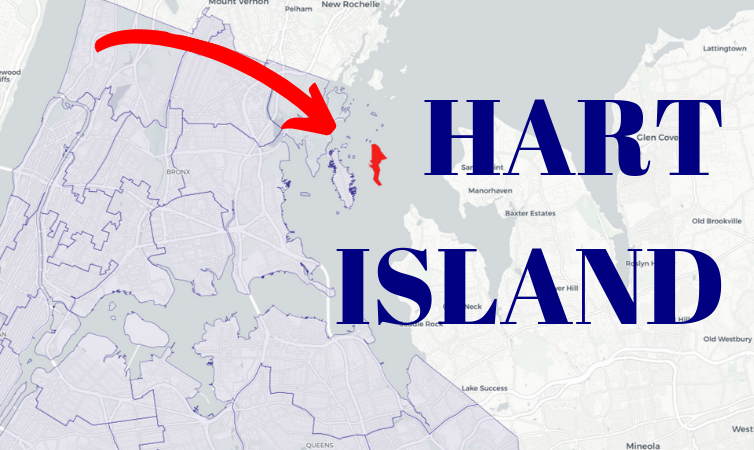
Currently, the Department of Correction (DOC) maintains and operates the City Cemetery, commonly known as Potter’s Field, located on Hart Island, in Long Island Sound. The cemetery on Hart Island is purportedly the largest tax-funded cemetery in the world.
By many estimations, there are over one million people buried on Hart Island.
Hart Island was first used by the City as a public cemetery in 1869 for the burial of people who died indigent or whose bodies went unclaimed after their death.
In 2018, 1,213 individuals were buried on Hart Island, including 303 fetal remains, 81 children, and 829 adults.
Following a lawsuit and lobbying by advocates, Department of Correction now provides regular, monthly visits to Hart Island.
People Buried on Hart Island
Total Buried
+1 Million People
1869 – 2018
Buried in 2018
1,213 People
Hart Island Background
Most individuals buried on Hart Island (approximately 62 percent in 2018) have a next of kin who opted for a public burial.
Others may have a next of kin who is unknown or unreachable (33 percent).
Some are unidentified or do not have a next of kin.
Fifteen people or fewer are unidentified each year, and about 21 percent of the burials are fetal remains.
Hart Island & the AIDS epidemic
During the late 1980’s and early 1990’s, the number of individuals buried on Hart Island each year increased markedly, which coincided with the AIDS epidemic.
The first people identified as AIDS victims were buried on Hart Island in 1985.
They were buried in an isolated area away from the remains of other individuals, in deep individual graves, under several feet of dirt instead of the typical three.
Number of People Buried on Hart Island
1978 – 2016
Hart Island: Premature Death
Age of People Buried on Hart Island and National Average
1978 – 2016, Average age of children and adults
During the AIDS epidemic, there was a drop in the average age of those buried on Hart Island, with an extreme drop to 52 years old in 1990.
More recently, the average age of those buried on Hart Island was still much younger than the national average.
In 2016, for those buried on Hart Island, the average age of death was 65 years old, while the average of death nationally was roughly 79 years old.
Hart Island: Location of Death Over Time
Hart Island: Location of Death Over Time
1978 – 2016
Hart Island Burial Process
Both the staff and work detail are responsible for the burial of remains, and for tending to the Island’s upkeep.
The bodies of the deceased that are transported to the Island are placed in pine boxes marked by black permanent marker.
The boxes are stacked three deep in a trench 36 inches below the surface, burying between 150 to 162 adults and 1,000 infant and fetal remains per trench.
Visiting Hart Island
According to DOC, there are two options visitors may choose from when seeking to visit Hart Island, both of which operate on predetermined schedules: monthly gazebo visits for any member of the public and monthly gravesite visits for family.
Visitors must register with the Department of Correction before a scheduled visit day and provide a valid, government-issued photo ID if over the age of 16.
While access to the Island and its burial records have improved, there are still concerns about Hart Island’s accessibility.
According to advocates, the requirement of a photo ID and other protocols for visiting Hart Island deter members of the public from being able to visit.
Furthermore, because of the nature of DOC’s work, the visiting schedule is rigid and can act as a barrier for members of the public.
Legislation
This new legislative package includes several bills that together will help to examine the City’s burial process, improve accessibility to Hart Island, and respect the memory of those buried there.
- Transfer jurisdiction over Hart Island from the Department of Correction to the Department of Parks and Recreation. Read the Bill: Int 906
- Require the Department of Transportation to develop a plan to maintain and operate regular ferry service to Hart Island. Read the Bill: Int 909
- Create a task force on public burial and related issues. Read the Bill: Int 1580
- Establishes an office to provide support to those in need of burial assistance. Read the Bill: Int 1559
For feedback, comments, and questions please email Data@council.nyc.gov.
Created by the NYC Council Data Team.